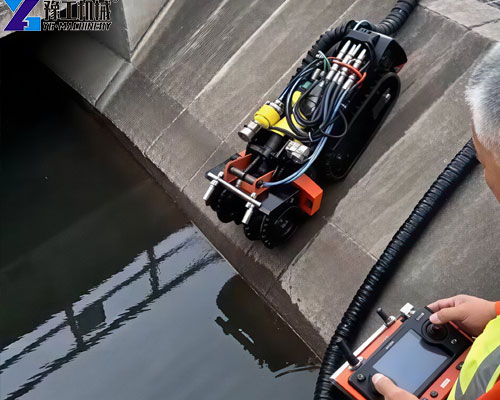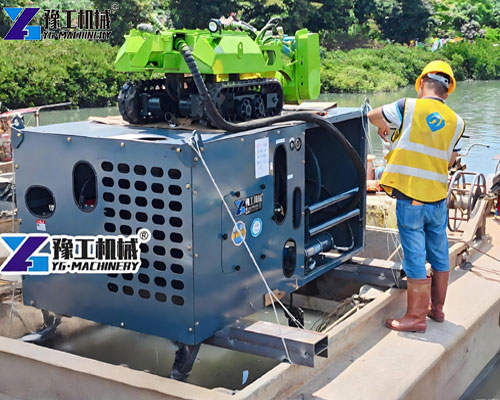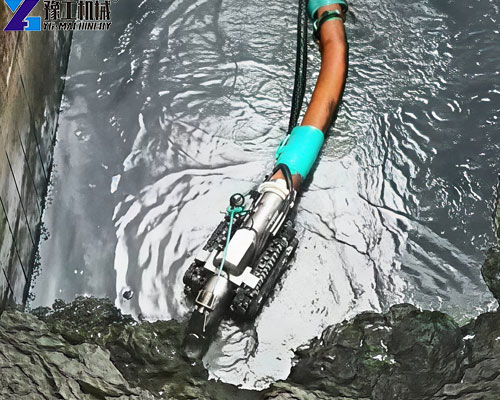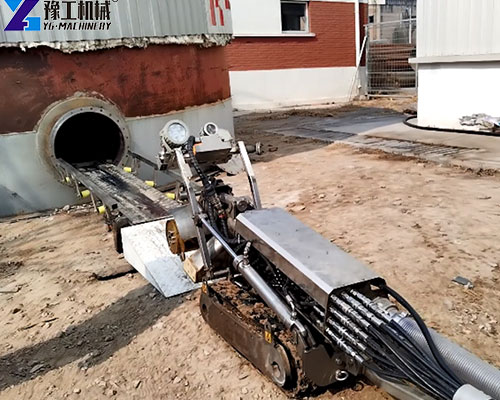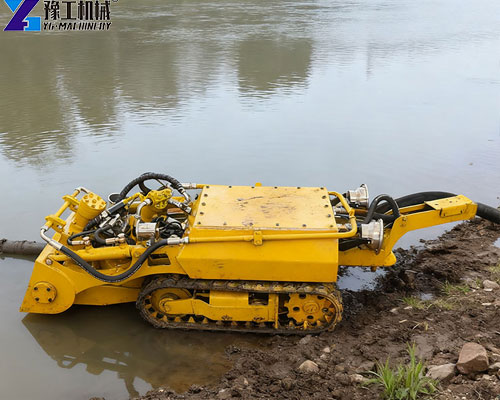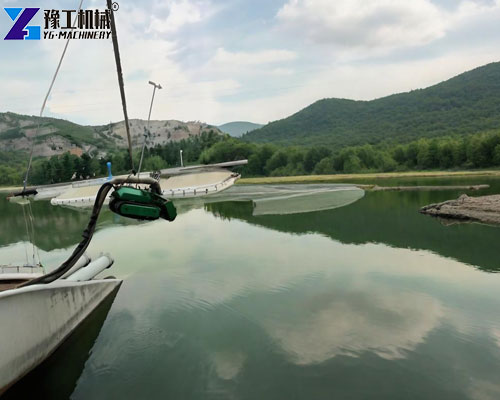
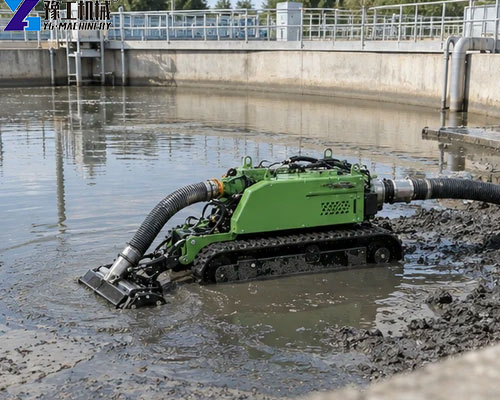
An Australian chemical company purchased an intelligent dredging robot to remove accumulated scale and sludge from its industrial facility. The project required equipment that could move across challenging surfaces, simplify sludge removal, and reduce workers’ exposure to difficult cleaning operations.
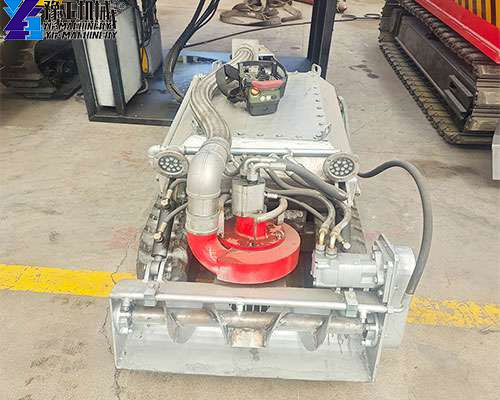
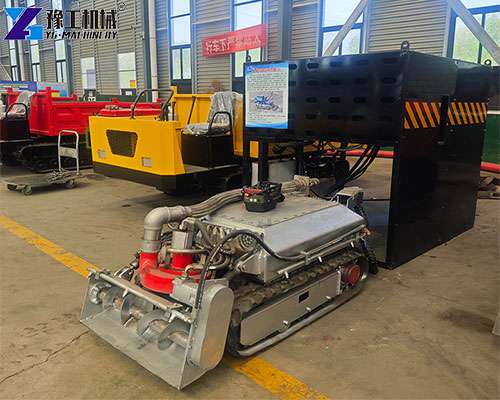
The supplied robot features a tracked travel system and remote-controlled operation. According to the project description, the equipment is portable, easy to operate, and designed to improve cleaning efficiency while reducing the need for direct human involvement in hazardous work areas.
For industrial facilities dealing with accumulated sludge and sediment, selecting the right dredging robot depends on the material to be removed, site access, pumping requirements, and the safety conditions of the working environment.
Intelligent Dredging Robot Parameters
YG offers several dredging robot models for different cleaning widths, pumping requirements, and site conditions. The following table provides a general reference for model selection; the final configuration should be confirmed against the project requirements.
| Parameter | YG450 | YG500 | YG600 | YG700 | YG800 | YG900 | YG1200 |
| Robot Dimensions (mm) | ≤1700 × 450 × 450 | 1500 × 500 × 650 | 1500 × 600 × 650 | 1600 × 700 × 650 | 1600 × 850 × 700 | 1650 × 960 × 750 | 1900 × 1200 × 750 |
| Applicable Manhole / Access | ≥600 mm opening | ≥600 mm opening | ≥600 mm opening | ≥700 mm opening | ≥800 mm opening | ≥900 mm opening | Large culvert / open access |
| Dredging Width (mm) | 450 | 500 | 600 | 700 | 800 | 900 | Suitable for large culverts |
| Travel Speed (m/min) | 3–12 | 3–15 | 3–15 | 3–15 | 3–15 | 3–15 | 3–17 |
| Pump Diameter (inch) | 3 | 3 | 3 | 4 | 4 | 4 | 4 or 6 |
| Pump Flow (m³/h) | 50 | 100 | 100 | 160 | 160 | 200 | 250 |
| Pump Head (m) | 0-30 | 0–30 | 0–30 | 0–25 | 0–25 | 0–25 | 0–30 (Horizontal: 100–150 m) |
| Hydraulic Station Dimensions (mm) | 2000 × 1100 × 1500 (recommended) | 2200 × 1200 × 1700 | 2200 × 1200 × 1700 | 2200 × 1200 × 1700 | 2200 × 1200 × 1700 | 2200 × 1200 × 1700 | 2120 × 1240 × 1200 |
| Main Motor Power (kW) | 11–15 kW | 18 | 18 | 22 | 22 | 22 | 45 kW (50 kW) / Diesel 76 kW (123 kW) |
| Hydraulic System Pressure (MPa) | 0–16 | 0–16 | 0–16 | 0–16 | 0–16 | 0–16 | Custom / high-pressure system |
| Particle Size Capacity (mm) | ≤10–20 mm (soft sludge) | 15 | 15 | 40 | 40 | 50 | 0–40 (customizable) |
| Winch Speed (r/min) | 0–10 | 0–10 | 0–10 | 0–10 | 0–10 | 0–10 | 0–10 |
| Pipe Length (m) | 20–30 optional | 30–50 optional | 30–50 optional | 30–50 optional | 30–50 optional | 30–50 optional | 30 m/pack, high-pressure resistant |
| Control System | Wireless Remote Control | Wireless Remote | Wireless Remote | Wireless Remote | Wireless Remote | Wireless Remote | Wireless Remote |
| Lighting System | Underwater LED ×2 | Underwater LED ×2 | Underwater LED ×2 | Underwater LED ×2 | Underwater LED ×2 | Underwater LED ×2 | Underwater LED ×2 |
Note: Pump flow is a rated equipment parameter, not a guaranteed sludge removal rate. Actual performance depends on sludge composition, solids concentration, pipeline length, elevation, and operating conditions. Confirm the complete configuration and specifications before ordering.

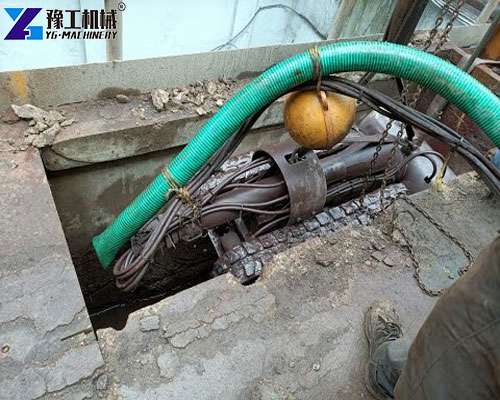
Challenges of Sludge Cleaning in Chemical Plants
Industrial sludge and scale can accumulate in process areas, collection pits, drainage channels, and other locations that are difficult to clean. Depending on the material and operating environment, conventional cleaning methods may require substantial manual work or expose workers to additional risks.
Common challenges include:
- Difficult access: Narrow passages, confined spaces, or uneven surfaces can restrict equipment movement.
- Potential worker exposure: Manual cleaning may bring workers into contact with hazardous residues or unsafe working environments.
- Difficult sludge handling: Sticky sludge, scale, and mixed sediment can require suitable pumping equipment and discharge pipelines.
- Operational downtime: Extended cleaning operations can interfere with routine plant maintenance and production schedules.
The right equipment should be selected according to the actual cleaning task rather than relying on a single machine configuration for every industrial application.
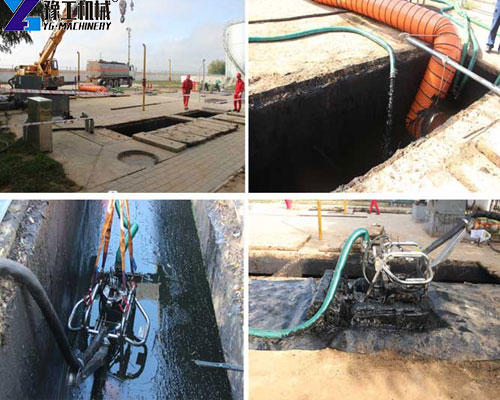
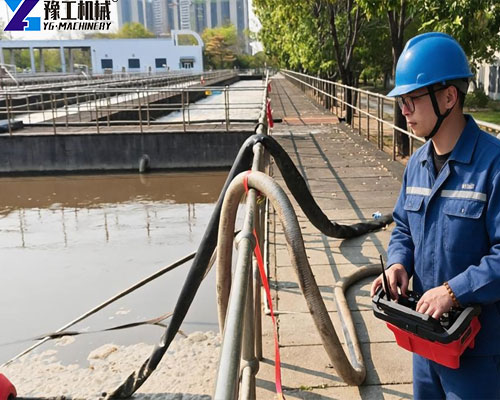
Australian Chemical Plant Case: Intelligent Dredging Robot for Sludge Cleaning
An Australian chemical company purchased a YG intelligent dredging robot to remove accumulated scale and sludge from its plant area. The customer needed portable equipment that could navigate the working environment, simplify cleaning operations, and reduce workers’ exposure to potential hazards.
Equipment Configuration and Key Advantages
The supplied robot featured a tracked chassis and an explosion-proof motor. The tracked design supports movement across suitable uneven or muddy surfaces, while remote-controlled operation allows the operator to control the equipment from an appropriate position, reducing the need for direct involvement in the cleaning area.
Pump configuration is another important consideration for industrial sludge removal. YG’s product range offers reference pump flows from 100 to 250 m³/h, depending on the model. The appropriate configuration depends on sludge composition, solids concentration, pipeline length, elevation, and discharge requirements. These figures represent product specifications rather than the guaranteed removal rate for this Australian project.
Because the application involved a chemical plant, equipment safety also requires careful verification. An explosion-proof motor alone does not establish that the complete robot is suitable for every hazardous area. The equipment’s certification, electrical and hydraulic configuration, and compatibility with the site’s hazardous-area classification must be confirmed before deployment.
Customer Feedback
According to the customer, the robot was portable, easy to operate, and helped improve work efficiency while reducing human risk during cleaning operations.
This project demonstrates how a suitably configured dredging robot can support industrial sludge cleaning by combining tracked mobility, remote operation, and pumping equipment selected for the material and site conditions.
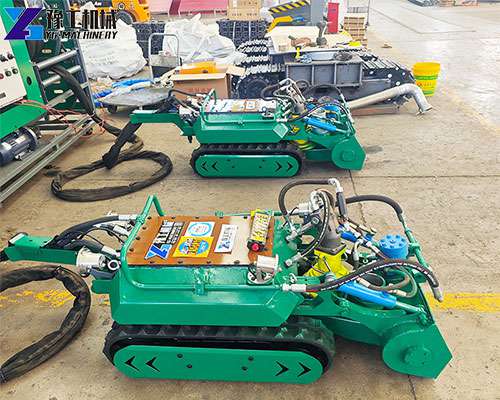
How to Choose a Dredging Robot for Industrial Sludge Cleaning?
Before purchasing a industrial dredging robot for a chemical plant, provide the supplier with the following information:
- Sludge composition: Describe the material, including its viscosity, solids concentration, particle size, and any chemical properties relevant to equipment compatibility.
- Working environment: Specify whether the robot will operate in a tank, pit, drainage channel, pond, or open plant area.
- Access dimensions: Provide the available entrance width, height, turning space, and any restrictions on equipment size.
- Pumping distance: Confirm the required pipeline length, vertical lift, and discharge location.
- Safety requirements: Identify any hazardous-area classification and the applicable certification or equipment requirements.
- Operating conditions: Provide the expected cleaning frequency, required working depth, and available utilities.
These details help determine the suitable robot size, pump configuration, control system, and safety options.
FAQ about Industrial Dredging Robot
Can a dredging robot clean industrial sludge and scale?
It may be suitable for certain types of industrial sludge and deposits. The material’s hardness, particle size, viscosity, and chemical properties should be evaluated before selecting the equipment. Hard scale may require a different removal method from pumpable sludge.
Can the robot be used in a chemical plant?
Potentially, depending on the site conditions and equipment configuration. The robot must be verified as suitable for the specific working environment, particularly where hazardous substances or classified hazardous areas are involved.
What pump capacity is available?
YG’s listed dredging robot range includes nominal pump flows of 100, 160, 200, and up to 250 m³/h, depending on the model. Actual performance depends on the material and pumping system.
Can the robot be operated remotely?
The listed models support wireless remote control. The required control range and operating conditions should be confirmed for each project.
How can I select the right model?
Share the sludge type, working-area dimensions, access restrictions, pumping distance, and safety requirements with the supplier. These details help establish whether a standard model or a customized configuration is appropriate.
Request a Dredging Robot Solution for Your Industrial Project
Looking for a dredging robot for chemical plant sludge cleaning, industrial sediment removal, or wastewater-related maintenance?
Contact YG with your working conditions and technical requirements. Our team can help assess the appropriate robot size, pumping configuration, and control options for your project.
Request a quotation with the following information:
- Sludge type and approximate thickness
- Working-area dimensions and access opening
- Required discharge distance and elevation
- Site safety requirements and applicable certifications