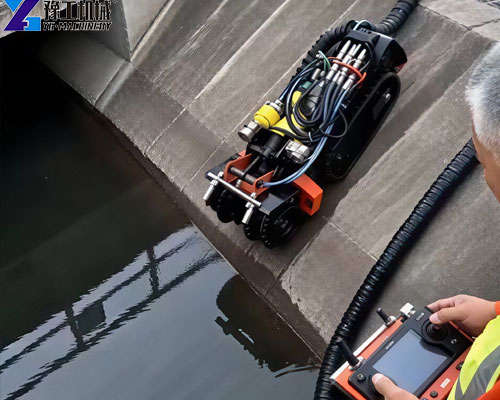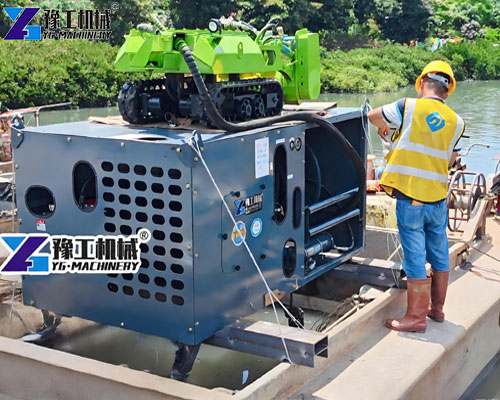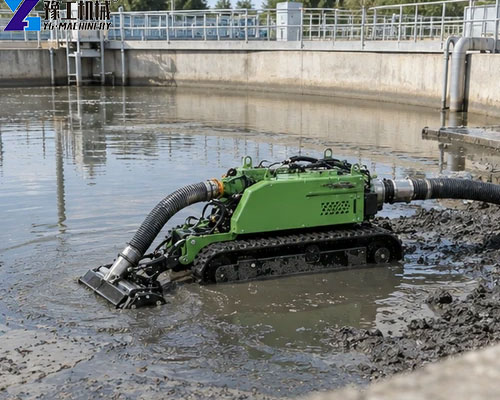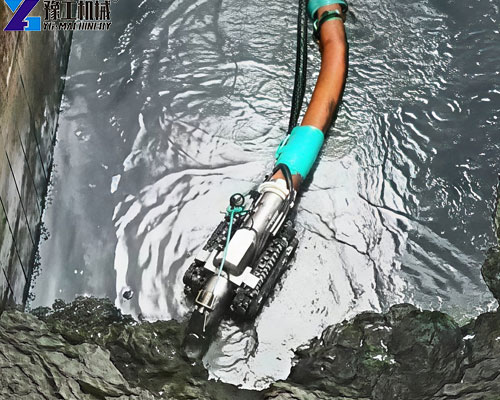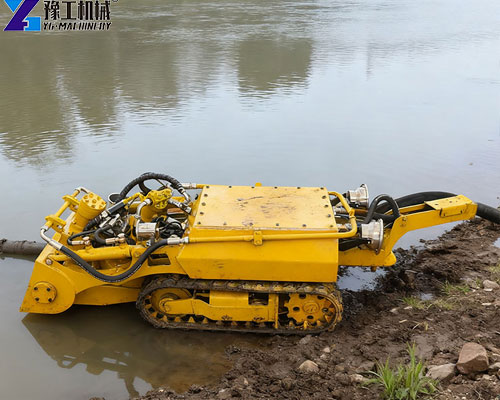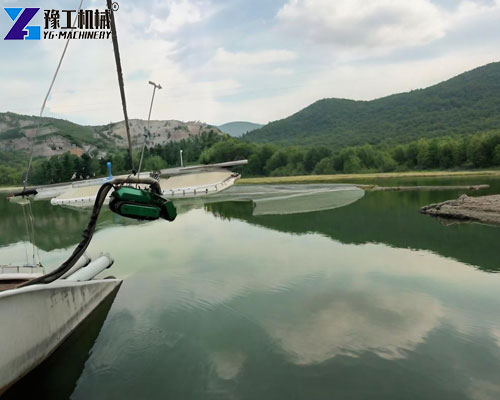
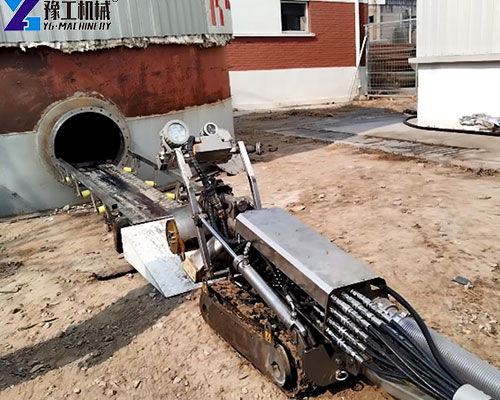
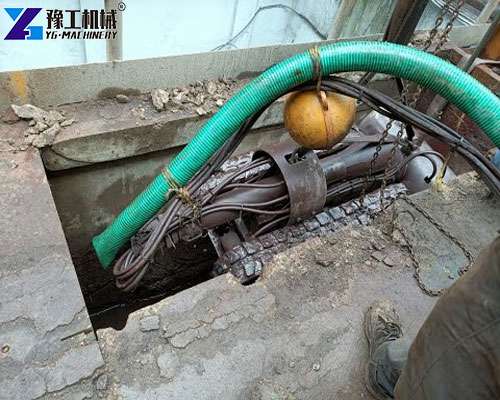
In early 2025, a Nigerian industrial services company purchased a YG450 robotic dredge from YG Machinery for oil tank sludge removal. The customer needed compact equipment that could pass through a tank manhole and remove accumulated sludge and sediment from inside the tank.
The YG450 dredging robot measures no more than 1,700 × 450 × 450 mm and is suitable for access openings of at least 600 mm. Its configuration includes a high-pressure water jet, an underwater LED viewing system, wireless remote control and a hydraulic pumping system for remote sludge discharge.
By combining a compact crawler design with remote operation and sludge pumping capabilities, the YG450 provides a practical option for industrial tank cleaning where access is limited and accumulated sediment needs to be removed.
Project Background: Oil Tank Sludge Removal in Nigeria
Sludge and sediment can accumulate at the bottom of oil storage tanks over time. Depending on the stored material and operating conditions, these deposits may contain soft sludge, sand and other settled solids.
Removing the buildup can be challenging when tank access is restricted. Conventional manual cleaning may require extensive preparation and expose workers to confined-space hazards. Pumping equipment may also struggle if the sludge is too thick or contains particles beyond the pump’s handling capacity.
For this Nigerian project, the customer needed a robotic dredge that could:
- Pass through a tank manhole with limited clearance.
- Remove accumulated sludge and sediment from inside the tank.
- Use a high-pressure water jet to help loosen suitable deposits.
- Provide visual monitoring in dark, enclosed working areas.
- Allow operators to control the robot remotely while pumping sludge to a designated discharge point.
YG450 Robotic Dredge Solution
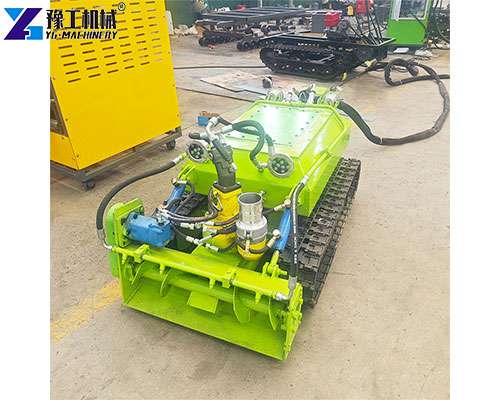
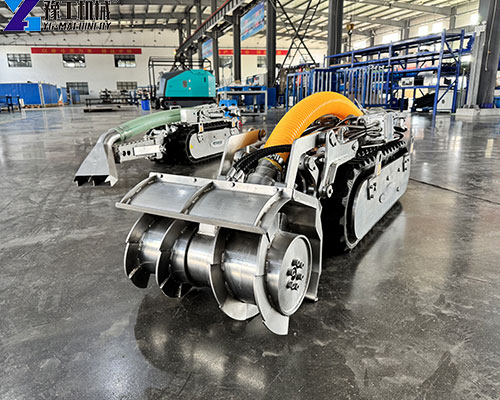
YG Machinery supplied the YG450, a compact dredging robot designed for sludge removal in restricted-access environments.
With a maximum stated body size of 1,700 × 450 × 450 mm, the robot can pass through an access opening of at least 600 mm, subject to the actual opening geometry, internal obstructions and installation conditions.
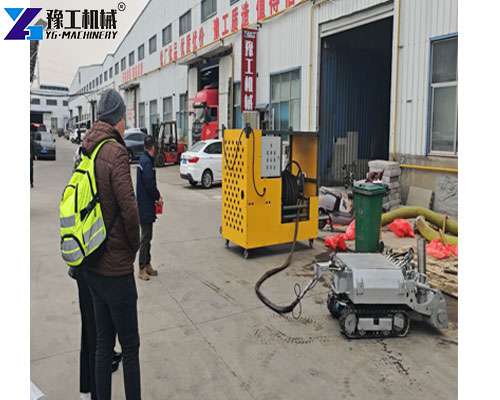
The equipment combines a crawler travel system, a high-pressure water jet, underwater LED lighting, wireless remote control and a hydraulic pumping arrangement. These features help operators position the robot, inspect the working area and remove suitable sludge without relying entirely on manual cleaning inside the tank.
Key Features for Oil Tank Sludge Removal
1. Compact Design for Restricted Manhole Access
The YG450 has a body width of 450 mm and a maximum stated height of 450 mm. Its compact dimensions make it suitable for tanks with restricted access, provided the clear opening is at least 600 mm and the entry path allows sufficient maneuvering clearance.
Before ordering, the customer should confirm the manhole’s clear dimensions, shape, access angle and any obstructions along the entry route.
2. High-Pressure Water Jet for Sludge Loosening
The high-pressure water jet helps loosen suitable sludge and settled deposits so they can be collected and pumped away. Its effectiveness depends on sludge consistency, sediment composition and operating conditions.
Water-jet pressure and flow should be selected for the specific material and tank environment rather than assumed to be suitable for every type of oil sludge.
3. Underwater LED Lighting and Visual Monitoring
The YG450 is equipped with two underwater LED lights to illuminate the working area. This helps operators monitor the robot’s position and observe visible sludge conditions through a compatible viewing system.
Actual visibility depends on water clarity, suspended solids, lighting conditions and the installed camera configuration.
4. Wireless Remote Control
Wireless remote control allows operators to maneuver the crawler and manage equipment functions from outside the immediate working area. Remote operation can reduce the need for direct manual intervention during suitable cleaning tasks.
The actual control range depends on the supplied configuration and site conditions. Tank structures and surrounding equipment may affect wireless signal performance.
5. Hydraulic Pumping System for Remote Sludge Discharge
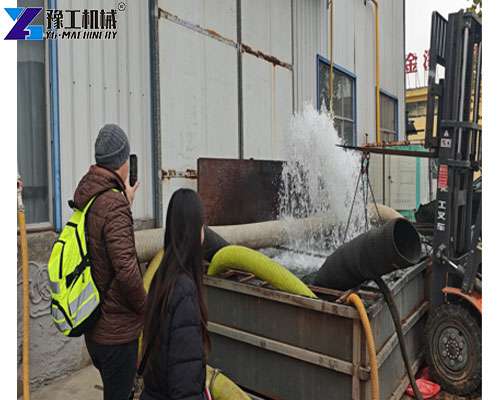
The YG450 uses a pumping system to convey collected sludge through a discharge hose to a designated location. Its nominal pump flow is 50 m³/h, with a stated pump head of 0–30 m.
Actual pumping performance depends on sludge viscosity, solids content, pipe diameter, discharge distance, elevation and system configuration. The pump must be matched to the material and required conveying conditions.
YG450 Robotic Dredge Specifications
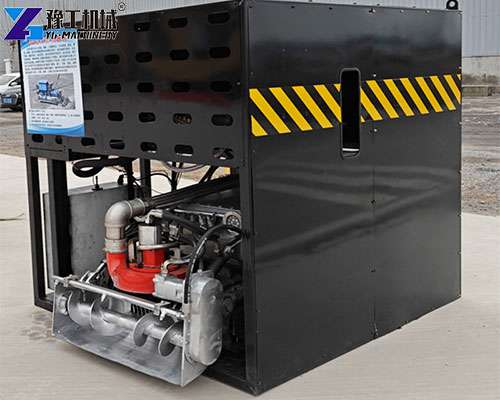
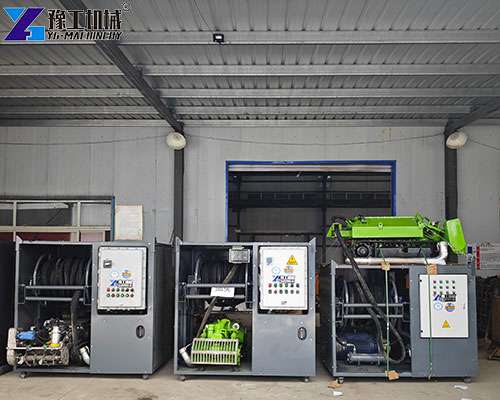
The following table summarizes the YG450’s main specifications for restricted-access sludge removal applications.
| Parameter | YG450 |
|---|---|
| Robot Dimensions (mm) | ≤1,700 × 450 × 450 |
| Applicable Manhole / Access | ≥600 mm opening |
| Dredging Width (mm) | 450 |
| Travel Speed (m/min) | 3–12 |
| Pump Diameter (inch) | 3 |
| Pump Flow (m³/h) | 50 |
| Pump Head (m) | 0–30 |
| Recommended Hydraulic Station Dimensions (mm) | 2,000 × 1,100 × 1,500 |
| Main Motor Power (kW) | 11–15 |
| Hydraulic System Pressure (MPa) | 0–16 |
| Particle Size Capacity (mm) | ≤10–20 for soft sludge; confirm material suitability |
| Winch Speed (r/min) | 0–10 |
| Optional Pipe Length (m) | 20–30 |
| Control System | Wireless remote control |
| Lighting System | 2 underwater LED lights |
Specifications should be confirmed against the final supplied configuration. The stated particle-size capacity applies to suitable soft sludge and should not be interpreted as a guarantee for every material. Pump flow and head are nominal specifications, not guaranteed simultaneous operating values.

Why Choose a Robotic Dredge for Tank Sludge Removal?
A robotic dredge can be a practical option for industrial tanks where accumulated sludge must be removed through restricted access. Before selecting a machine, consider three key factors:
- Tank access: Check the manhole dimensions, entry path and internal clearance to ensure the robot can enter and maneuver safely.
- Sludge characteristics: Assess viscosity, solids content and particle size to determine whether the water jet and pumping system are suitable for the material.
- Discharge requirements: Confirm the required hose length, pumping distance and elevation to match the equipment to the site conditions.
For oil tanks that may contain flammable vapors, also verify the equipment’s suitability for the hazardous-area classification and applicable safety requirements. Remote operation can reduce the need for personnel to enter the tank, but it does not eliminate confined-space hazards or replace required safety procedures.
Choosing the right robotic dredge therefore depends on both the equipment specifications and the actual tank conditions.
FAQ About Robotic Dredges for Sludge Removal
1. Can the YG450 robotic dredge pass through a tank manhole?
The YG450 measures no more than 1,700 × 450 × 450 mm and is specified for access openings of at least 600 mm. The opening shape, approach angle, internal obstructions and maneuvering clearance should be checked before deployment.
2. Can the YG450 remove thick oil tank sludge?
The robot is intended for sludge and sediment removal, but suitability depends on the sludge’s viscosity, solids content, particle size and composition. A sample or detailed description of the material can help determine whether the standard pumping arrangement is appropriate.
3. How does the robotic dredge discharge sludge from the tank?
The pumping system conveys collected material through a discharge hose. The YG450 has a nominal pump flow of 50 m³/h and a stated pump head of 0–30 m. Actual performance depends on the material, pipe layout and operating conditions.
4. Can the robot operate in a flammable tank environment?
Not automatically. The complete equipment configuration must be evaluated against the tank’s hazardous-area classification and applicable safety requirements. Confirm any required explosion-protection certification before deployment.
5. What information is needed to select a suitable dredging robot?
Provide the tank dimensions, manhole size, sludge characteristics, expected particle size, required discharge distance and elevation, and site safety requirements. This information helps determine the appropriate robot, pumping system and optional equipment.
Request a Robotic Dredge for Your Sludge Removal Project
Looking for a compact robotic dredge for oil tank sludge removal or other restricted-access cleaning applications?
YG Machinery can assess your working conditions and recommend a suitable configuration based on the access opening, sludge properties, pumping requirements and site safety conditions.
Contact our team with your tank dimensions, sludge details and required discharge distance to discuss a suitable dredging solution.