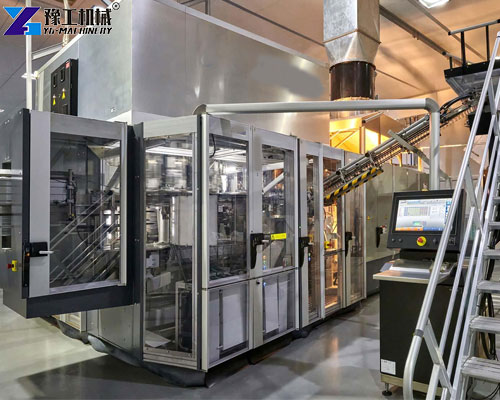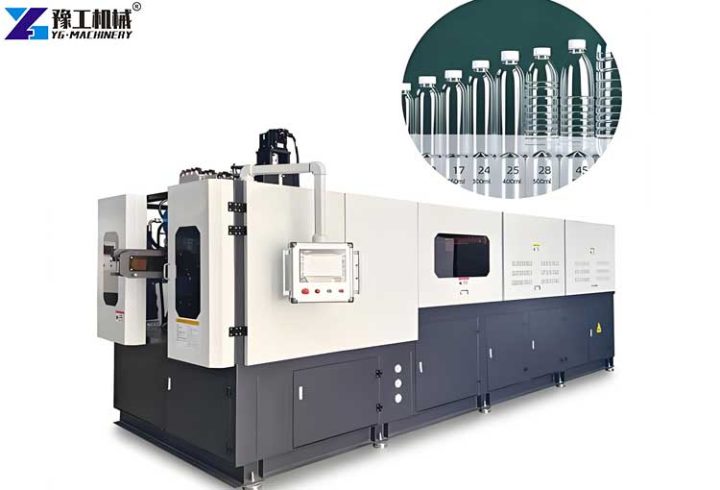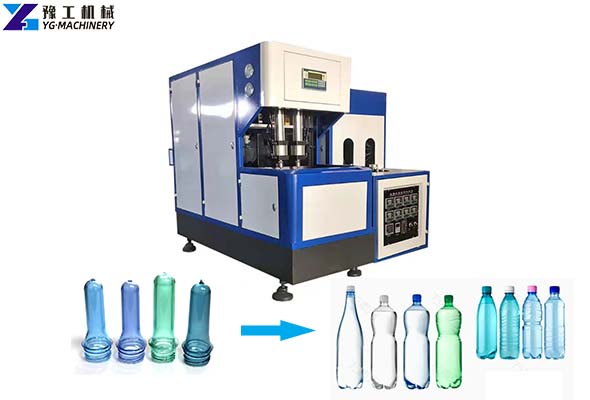
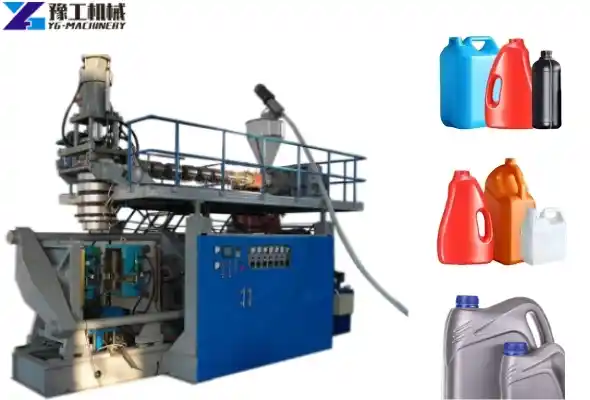
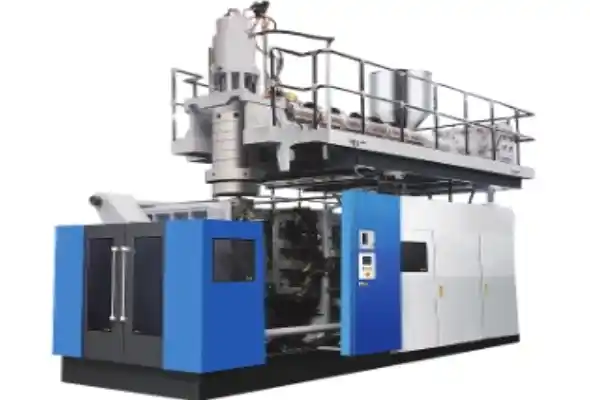
YG provides plastic bottle blow molding machines for manufacturing hollow plastic bottles, jerry cans, and industrial containers. Based on extrusion blow molding technology, our machines process compatible thermoplastic materials such as PE, HDPE, and PP, depending on the machine configuration.
YG offers three machine series: EB50, SX-55, and SX-75. With different screw diameters, extrusion capacities, clamping forces, and mold dimensions, these machines accommodate different container sizes and production requirements.
From small plastic bottles to 5-liter industrial containers, YG provides machine configurations, customized blow molds, and auxiliary equipment to support plastic container manufacturing. Customers can select a suitable model according to their raw material, product dimensions, container weight, and required production output.
1. Plastic Bottle Blow Molding Machine Specifications
YG offers several extrusion blow molding machine configurations for manufacturing plastic bottles and hollow containers. The EB50 series provides four extrusion configurations, while the SX-55 and SX-75 offer additional options for different container capacities.
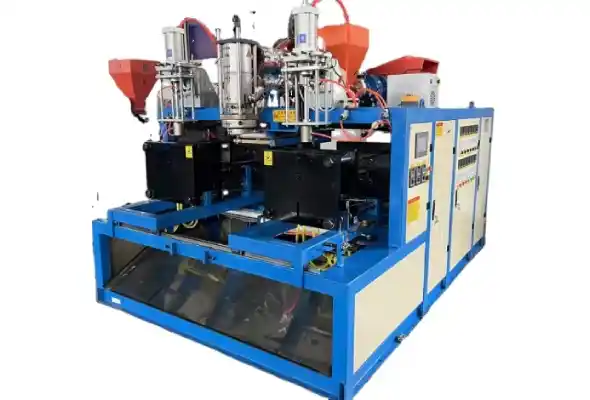
YG EB50 Series Blow Molding Machines
The EB50 series is designed for hollow plastic container production with a maximum product volume of 5 liters. Its four configurations offer different screw diameters, extrusion capacities, and heating arrangements.
| Parameter | EB50H70S | EB50H75S | EB50H75-45D | EB50H75-25S |
|---|---|---|---|---|
| Max. Product Volume (L) | 5 | 5 | 5 | 5 |
| Clamping Force (kN) | 86 | 86 | 86 | 86 |
| Dry Cycle Time (sec) | 5.8 | 5.8 | 5.8 | 5.8 |
| Screw Diameter (mm) | 70 | 75 | 75+45 | 75+25 |
| Screw L/D Ratio | 25 | 26 | 26+25 | 26+20 |
| Screw Speed (rpm) | 65 | 65 | 65+40 | 65+25 |
| HDPE Extrusion Output (kg/h) | 70 | 85 | 85+20 | 85+2 |
| Extrusion Motor Power (kW) | 22 | 22 | 22+5.5 | 22+1.5 |
| Pump Motor Power (kW) | 15 | 15 | 15 | 15 |
| Heating Power (kW) | 15 | 18 | 15+6 | 18+3 |
| Operating Pressure (MPa) | 0.6–0.8 | 0.6–0.8 | 0.6–0.8 | 0.6–0.8 |
| Air Consumption (m³/min) | 2.5 | 2.5 | 2.5 | 2.5 |
| Chilled Water Consumption (L/min) | 100 | 100 | 100 | 100 |
| Oil Tank Capacity (L) | 140 | 140 | 140 | 140 |
| Machine Dimensions (m) | 3.6×2.5×2.4 | 3.6×2.5×2.4 | 3.6×2.5×2.4 | 3.6×2.5×2.4 |
| Machine Weight (ton) | 6 | 6.2 | 6.7 | 6.7 |
The EB50 series offers different extrusion configurations to accommodate varying material processing and production requirements. Model selection depends on container design, material consumption, and required output.
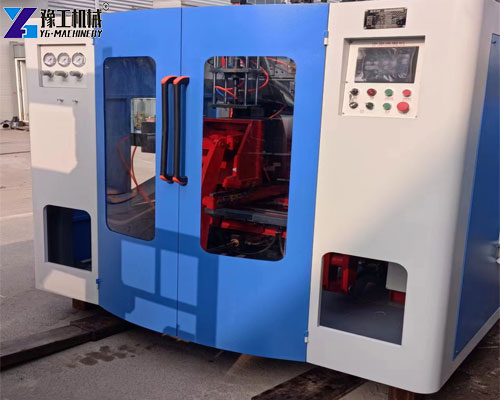
YG SX-55 Blow Molding Machine
The SX-55 is a compact extrusion blow molding machine designed for smaller hollow plastic containers. It features a 55 mm screw diameter and an HDPE extrusion output of 50–70 kg/h. Its specified maximum product volume is 2 liters.
| Parameter | SX-55 |
|---|---|
| Applicable Materials | PE, PET, PP |
| Max. Product Volume (L) | 2 |
| Screw Diameter (mm) | 55 |
| Screw L/D Ratio | 24–26 |
| Screw Motor Power (kW) | 15+1.1* |
| Screw Heating Capacity (kW) | 5.04–6.7 |
| Number of Heating Zones | 3 |
| HDPE Extrusion Output (kg/h) | 50–70 |
| Oil Pump Motor Power (kW) | 7.5 |
| Clamping Force (kN) | 38 |
| Mold Stroke (mm) | 138–368 |
| Mold Size (W×H) (mm) | 300×320 |
| Maximum Die Diameter (mm) | 90 |
| Die Heating Capacity (kW) | 2.8–3.5 |
| Blowing Pressure (MPa) | 0.6 |
| Air Consumption (m³/min) | 0.4 |
| Cooling Water Pressure (MPa) | 0.3 |
| Machine Weight (ton) | Approx. 4.1 |
| Machine Dimensions (L×W×H) (mm) | 3000×2000×1750 |
The SX-55 is an option for manufacturers producing smaller plastic bottles and hollow containers. Its extrusion output, clamping structure, and mold dimensions provide a configuration for different small-container applications.
The screw motor power is transcribed from the supplied manufacturer specification and should be confirmed before publication.
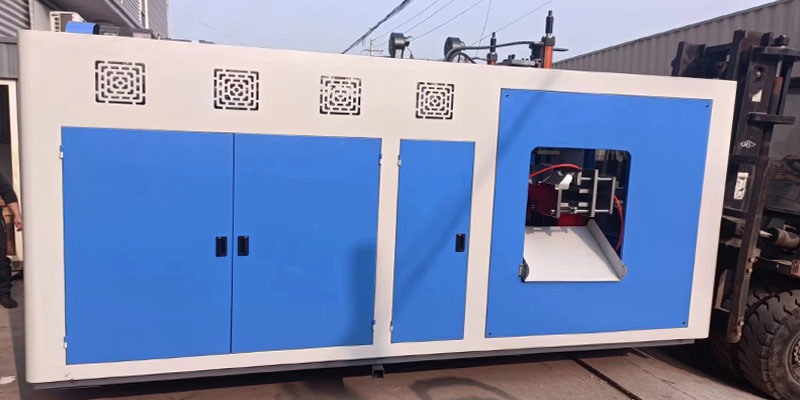
YG SX-75 Blow Molding Machine
The SX-75 is designed for manufacturing hollow plastic containers with capacities ranging from 1 to 5 liters. It features a 75 mm screw diameter and an HDPE extrusion output of 80 kg/h.
Its larger mold dimensions and maximum die diameter provide flexibility for producing different container shapes and sizes within the machine’s specifications.
| Parameter | SX-75 |
|---|---|
| Applicable Materials | PE, PP, ABS, EVA |
| Max. Product Volume (L) | 1–5 |
| Screw Diameter (mm) | 75 |
| Screw L/D Ratio | 24–26 |
| Screw Motor Power (kW) | 22 |
| Screw Heating Capacity (kW) | 5.04–6.7 |
| Number of Heating Zones | 4 |
| HDPE Extrusion Output (kg/h) | 80 |
| Oil Pump Motor Power (kW) | 7.5 |
| Clamping Force (kN) | 38 |
| Mold Stroke (mm) | 138–548 |
| Mold Size (W×H) (mm) | 370×508 |
| Maximum Die Diameter (mm) | 230 |
| Die Heating Capacity (kW) | 2.8–3.5 |
| Blowing Pressure (MPa) | 0.6 |
| Air Consumption (m³/min) | 0.4 |
| Cooling Water Pressure (MPa) | 0.3 |
| Machine Weight (ton) | Approx. 4.1 |
| Machine Dimensions (L×W×H) (mm) | 3000×2000×1750 |
The SX-75 is suitable for manufacturers considering production of medium-capacity hollow containers, including lubricant bottles, detergent containers, and industrial packaging, subject to material and mold compatibility.
Comparing EB50, SX-55, and SX-75
| Parameter | EB50 Series | SX-55 | SX-75 |
|---|---|---|---|
| Maximum Volume | 5 L | 2 L | 5 L |
| Screw Diameter | 70–75 mm* | 55 mm | 75 mm |
| HDPE Extrusion Output | 70–85 kg/h* | 50–70 kg/h | 80 kg/h |
| Clamping Force | 86 kN | 38 kN | 38 kN |
| Main Application | Hollow containers | Smaller containers | 1–5L containers |
EB50 values vary by configuration. Its 75+45 and 75+25 mm configurations have additional extrusion screws and separate output specifications.
The EB50 series provides higher clamping force and multiple extrusion configurations. The SX-55 is intended for smaller container production, while the SX-75 offers a 1–5L product range. The final selection should be based on container weight, material, mold dimensions, and actual production requirements.
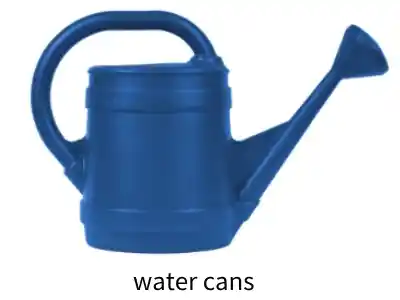
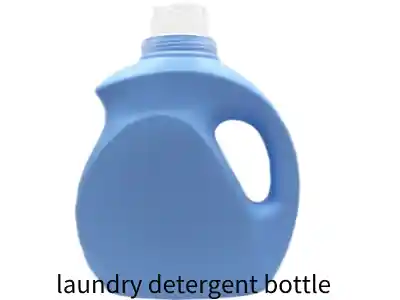
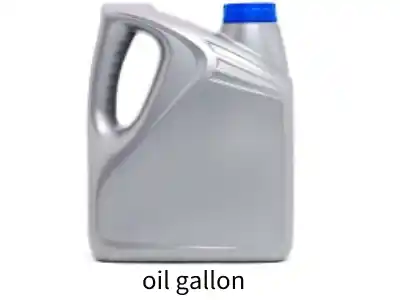
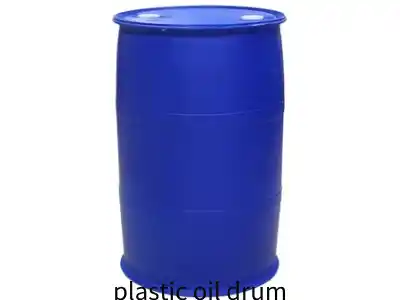
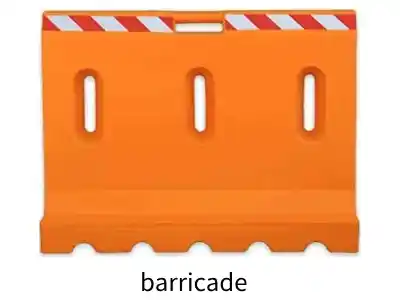
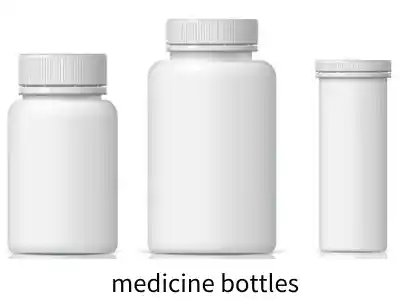
2. Applications of Plastic Bottle Blow Molding Machines
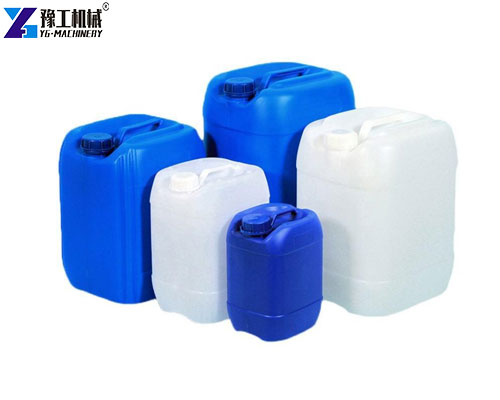
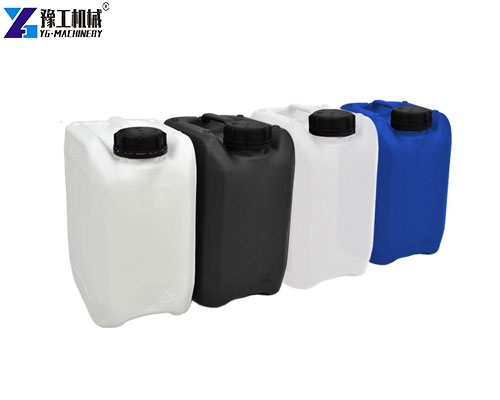
Extrusion blow molding machines are widely used for manufacturing hollow plastic packaging in the household, automotive, chemical, and industrial sectors.
Common applications include:
Lubricant and Motor Oil Bottles
PE and HDPE are widely used for lubricant bottles and motor oil containers because of their rigidity and chemical resistance. These products require suitable wall thickness distribution, structural strength, and reliable sealing.
Detergent and Household Chemical Bottles
HDPE is commonly used for detergent bottles, cleaning product containers, and household chemical packaging. The material provides good rigidity and resistance to many household chemicals.
Industrial Chemical Containers
Customized extrusion blow molding machines can manufacture different industrial containers according to product dimensions, wall thickness, and packaging requirements. Material compatibility with the packaged contents must be evaluated.
Other Hollow Plastic Products
Depending on the machine configuration and mold design, extrusion blow molding can also produce plastic jugs, cans, and other customized hollow containers.
3. Materials for Extrusion Blow Molding
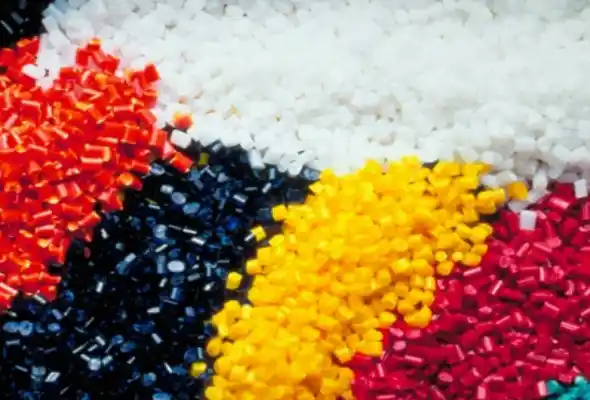
Material selection directly affects extrusion behavior, product strength, and finished container quality.
PE and HDPE
Polyethylene is widely used in extrusion blow molding. HDPE offers good rigidity, impact resistance, and chemical resistance, making it suitable for detergent bottles, lubricant containers, and industrial packaging.
The EB50 and SX series specifications include HDPE extrusion output, which provides a reference for evaluating their processing capabilities.
PP (Polypropylene)
PP can be used to manufacture selected hollow plastic products. Its processing characteristics differ from PE, so screw design, temperature settings, and molding conditions must be appropriate for the material.
Other Thermoplastics
The SX-55 specification lists PE, PET, and PP, while the SX-75 specification lists PE, PP, ABS, and EVA. Actual compatibility should be confirmed for the specific machine, extrusion head, and product requirements.
PET stretch blow molding is a separate process commonly used for manufacturing beverage bottles. The PET entry in a material list should not be interpreted as confirmation that a particular extrusion machine can produce conventional PET beverage bottles.
Main Components and Machine Configuration
An extrusion blow molding machine consists of several interconnected systems. Each component contributes to the overall molding process and affects production stability.
Efficient Plasticizing System
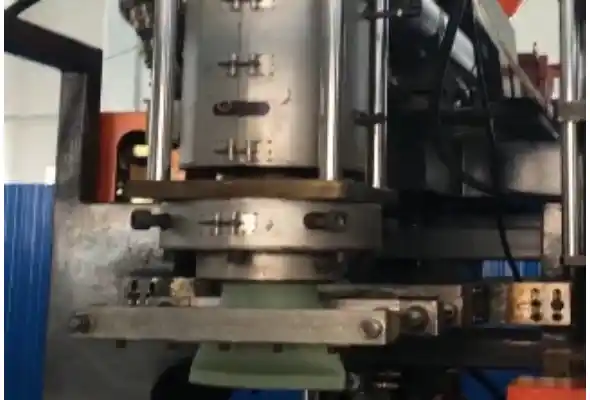
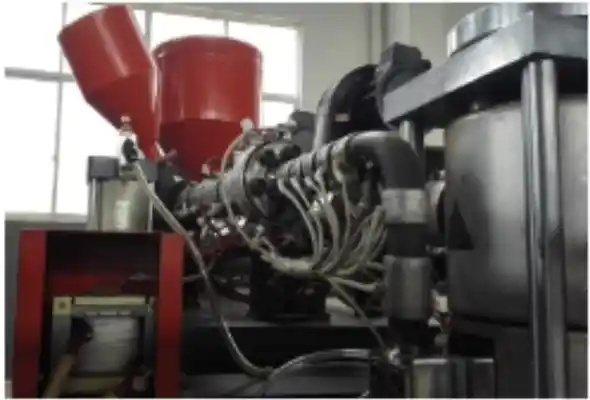
The SX series uses a 38CrMoAlA nitrided steel screw and barrel assembly. The screw is designed for efficient mixing and uniform plasticization, supporting a consistent molten material supply to the extrusion head.
Extrusion Die Head and Parison Control
The extrusion head forms molten plastic into a hollow parison before blowing. Depending on the machine configuration, shuttle or spiral flow-channel designs can be selected. Optional parison wall thickness control can help optimize material distribution and reduce unnecessary material consumption.
Variable-Frequency Extrusion Drive
The extruder uses variable-frequency speed control to adjust screw rotation according to processing requirements. This allows operators to regulate extrusion speed during production.
Stable Mold Movement and Clamping
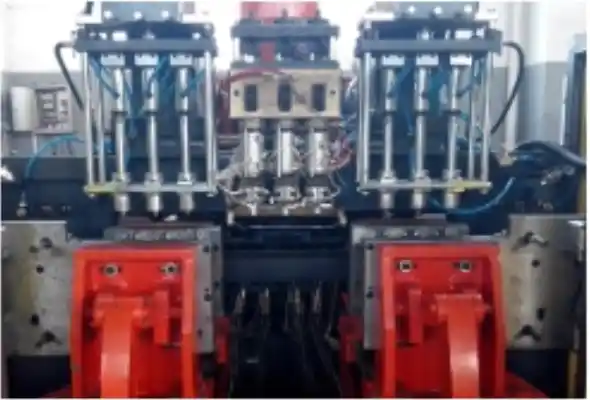
The mold base moves horizontally along linear rolling guide rails. The clamping cylinder is positioned in the middle of the template to help distribute force, while three guide rods support stable mold opening and closing.
Hydraulic System
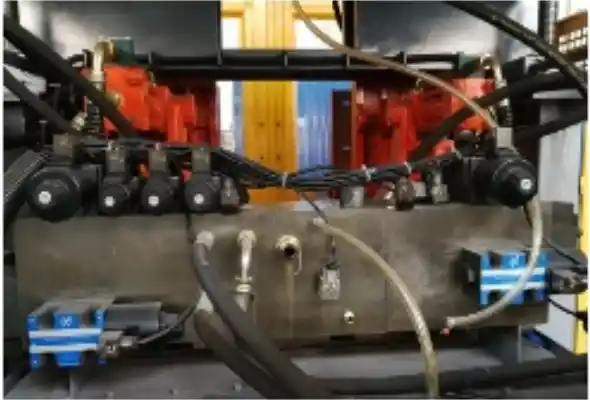
The hydraulic system drives the machine’s mechanical movements, including mold opening and closing. Its control characteristics influence movement speed, positioning, and operational stability.
Hydraulic and Pneumatic Systems
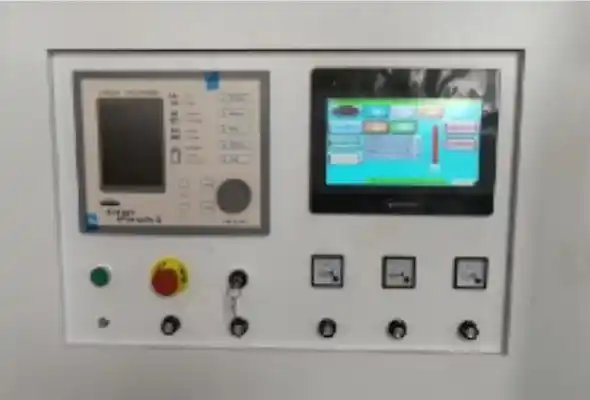
The hydraulic system controls mechanical movements, including mold opening and closing. The pneumatic system regulates compressed air used during the blowing process. Suitable system settings support stable operation throughout the production cycle.
Main Component Configuration of SX Series
| Component | Supplied Configuration |
|---|---|
| Screw and Barrel | 38CrMoAlA nitrided steel |
| Reducer | Hard-tooth surface reducer |
| Inverter | Minder |
| Temperature Controller | Delta |
| AC Contactor | Schneider |
| Air Switch | Schneider |
| Electrical Components | Schneider |
| Mold Guide Rails | Taiwan Shangyin linear rolling guide |
| Die Material | 42CrMo |
| Hydraulic Seals | Imported sealing rings |
| Pneumatic Components | Parker |
| Servo Oil Pump | Taiwan Delta |
Component brands and configurations may vary according to the final machine specification and order confirmation.
5. Complete Plastic Bottle Blow Molding Production Line
A plastic bottle manufacturing operation may require several auxiliary machines in addition to the main blow molding machine. YG can provide supporting equipment to help customers establish a suitable production setup.
Typical auxiliary equipment includes:
- Air Compressor and Air Storage Tank: Supply and stabilize compressed air for the blowing process.
- Plastic Grinder: Processes suitable production scrap and rejected products into smaller pieces for potential material reuse.
- Automatic Feeding Machine: Transfers plastic raw materials to the machine hopper, reducing manual handling.
- Plastic Mixer: Mixes raw materials, color masterbatch, and compatible additives.
- Industrial Chiller: Supplies cooling water to help control mold temperature.
- Customized Blow Molds: Form the final container shape, dimensions, and design.
The mold configuration should be selected according to bottle capacity, dimensions, weight, neck design, cavity number, and machine compatibility.
Customers can provide a bottle sample, technical drawing, or product photograph to help YG evaluate the appropriate machine and mold combination.
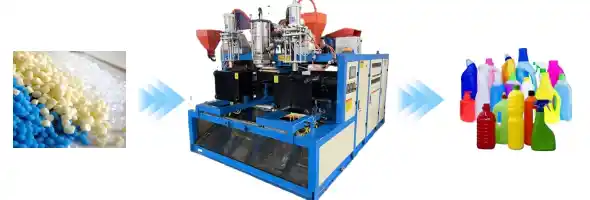
6. How Extrusion Blow Molding Works
Extrusion blow molding manufactures hollow plastic products by extruding molten plastic into a parison and expanding it inside a mold with compressed air.
The process consists of several coordinated stages:
- Material Feeding: Plastic pellets enter the hopper and are transferred into the heated extrusion barrel.
- Melting and Plasticizing: The rotating screw conveys, melts, and mixes the plastic material.
- Parison Extrusion: The molten plastic passes through the die head to form a hollow tube called a parison.
- Mold Closing: The mold closes around the parison and seals the required sections.
- Blow Molding: Compressed air expands the softened parison against the inner mold surface to form the container.
- Cooling: The plastic cools inside the mold until it can retain its shape.
- Product Removal and Trimming: The mold opens, and the finished container is removed and trimmed.
- Quality Inspection: The container is checked for dimensions, appearance, wall thickness, and other product-specific requirements.
The cycle then repeats for the next container.
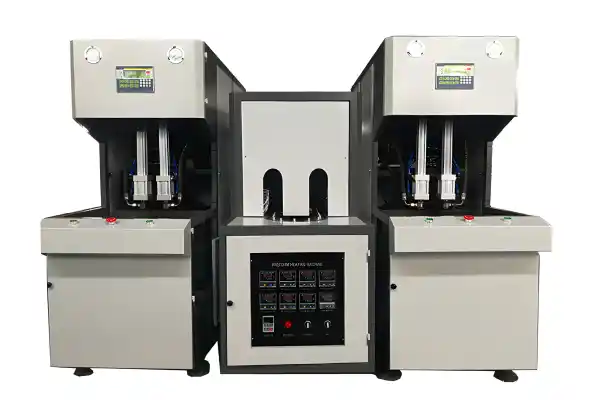
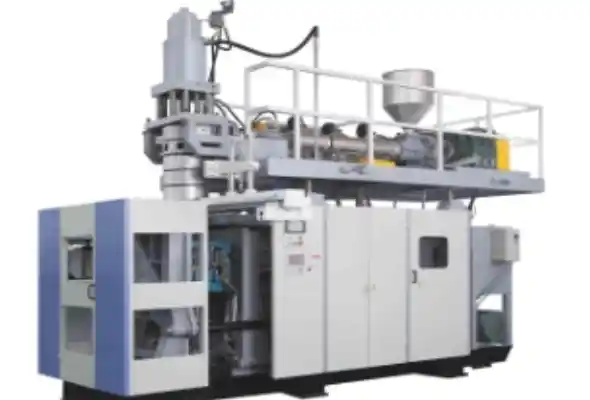
Extrusion Blow Molding vs. PET Stretch Blow Molding
These are two different manufacturing processes used for different types of plastic bottles.
| Comparison | Extrusion Blow Molding | PET Stretch Blow Molding |
|---|---|---|
| Starting Material | Plastic pellets | PET preforms |
| Forming Method | Extrudes a parison and inflates it inside a mold | Heats, stretches, and blows a preform |
| Common Materials | HDPE, PE, PP and other compatible plastics | PET |
| Typical Products | Detergent bottles, lubricant containers, chemical packaging | Water bottles and beverage bottles |
| Main Equipment | Extrusion blow molding machine | PET stretch blow molding machine |
Extrusion blow molding is widely used for HDPE bottles, lubricant containers, detergent bottles, and industrial packaging. PET stretch blow molding is commonly used for lightweight beverage and water bottles.
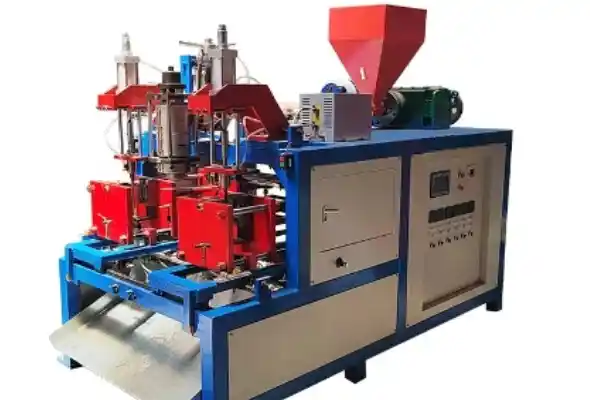
7. FAQ About Plastic Bottle Blow Molding Machines
Q1: What is a plastic bottle blow molding machine used for?
It is used to manufacture hollow plastic products such as detergent bottles, lubricant containers, chemical bottles, jerry cans, and industrial packaging. Extrusion blow molding is particularly suitable for compatible PE, HDPE, and PP materials.
Q2: What is the difference between the EB50, SX-55, and SX-75?
The main differences are screw diameter, extrusion output, clamping force, mold dimensions, and maximum container capacity. The EB50 series offers four extrusion configurations, the SX-55 is designed for smaller containers, and the SX-75 supports a specified product volume of 1–5 liters.
Q3: Can these machines produce HDPE bottles?
The supplied specifications include HDPE extrusion output for all three series. HDPE is commonly used for detergent bottles, lubricant containers, and industrial packaging. The final machine configuration should be confirmed according to the product requirements.
Q4: How is actual production capacity calculated?
Actual output depends on container weight, extrusion capacity, mold cavity number, cooling time, and machine cycle time. Extrusion output in kg/h indicates material processing capacity, not the number of finished bottles produced per hour.
Q5: Can YG customize blow molds?
Yes. YG can evaluate customized molds according to customer drawings, bottle samples, dimensions, capacity, and production requirements. Mold compatibility with the selected machine must also be considered.
Q6: Does YG provide auxiliary equipment?
YG can provide supporting equipment such as air compressors, air storage tanks, plastic grinders, automatic feeding machines, mixers, and industrial chillers. The final configuration depends on the selected machine and production requirements.
Get a Plastic Bottle Blow Molding Machine Solution from YG
Looking for a reliable blow molding machine for plastic bottle or container production?
YG offers EB50, SX-55, and SX-75 extrusion blow molding machine configurations, together with customized blow molds and auxiliary equipment.
Whether you are manufacturing PE and HDPE lubricant bottles, detergent containers, chemical packaging, or other compatible hollow plastic products, YG can help evaluate your requirements and recommend suitable equipment.
Send us your product drawing, bottle sample, material information, and expected production capacity.
Contact YG today to discuss your plastic bottle manufacturing project and request a customized quotation.