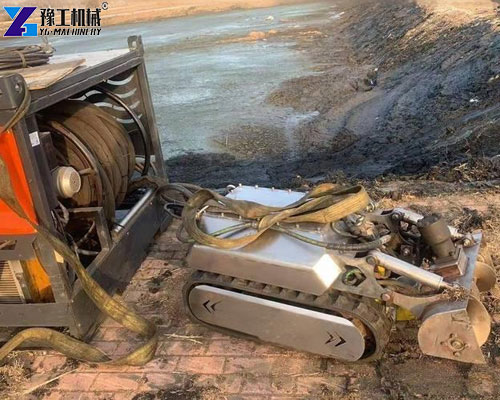
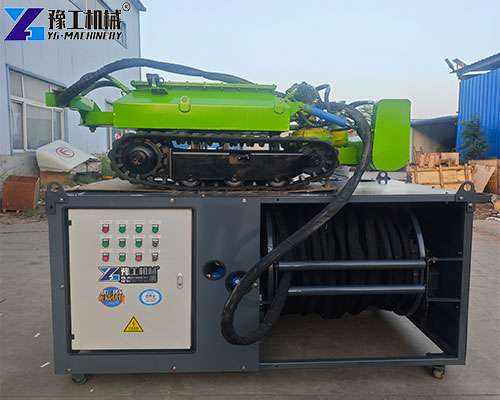
A dredging robot is designed to remove accumulated sludge, mud, and sediment from locations where conventional dredging equipment may be difficult to use. Depending on the model and site conditions, it can support sediment removal in industrial tanks, wastewater basins, lakes, large-diameter municipal pipelines, culverts, and covered drainage channels.
For contractors, municipalities, and industrial operators, the right dredging robot can help reduce manual work in contaminated or confined environments, improve access to accumulated sediment, and simplify sludge transfer. Model selection should consider the working environment, access dimensions, sediment properties, required pumping distance, and target removal capacity.
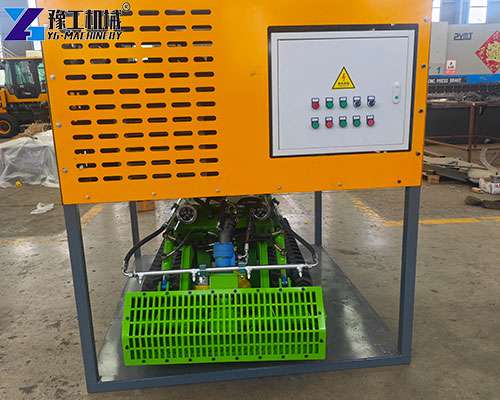
YG Machinery offers multiple dredging robot models for different sludge removal requirements. For project-specific recommendations, the robot should be matched to the actual site conditions rather than selected by model name alone.
Dredging Robot Parameters
| Parameter | YG450 | YG500 | YG600 | YG700 | YG800 | YG900 | YG1200 |
| Robot Dimensions (mm) | ≤1700 × 450 × 450 | 1500 × 500 × 650 | 1500 × 600 × 650 | 1600 × 700 × 650 | 1600 × 850 × 700 | 1650 × 960 × 750 | 1900 × 1200 × 750 |
| Applicable Manhole / Access | ≥600 mm opening | ≥600 mm opening | ≥600 mm opening | ≥700 mm opening | ≥800 mm opening | ≥900 mm opening | Large culvert / open access |
| Dredging Width (mm) | 450 | 500 | 600 | 700 | 800 | 900 | Suitable for large culverts |
| Travel Speed (m/min) | 3–12 | 3–15 | 3–15 | 3–15 | 3–15 | 3–15 | 3–17 |
| Pump Diameter (inch) | 3 | 3 | 3 | 4 | 4 | 4 | 4 or 6 |
| Pump Flow (m³/h) | 50 | 100 | 100 | 160 | 160 | 200 | 250 |
| Pump Head (m) | 0-30 | 0–30 | 0–30 | 0–25 | 0–25 | 0–25 | 0–30 (Horizontal: 100–150 m) |
| Hydraulic Station Dimensions (mm) | 2000 × 1100 × 1500 (recommended) | 2200 × 1200 × 1700 | 2200 × 1200 × 1700 | 2200 × 1200 × 1700 | 2200 × 1200 × 1700 | 2200 × 1200 × 1700 | 2120 × 1240 × 1200 |
| Main Motor Power (kW) | 11–15 kW | 18 | 18 | 22 | 22 | 22 | 45 kW (50 kW) / Diesel 76 kW (123 kW) |
| Hydraulic System Pressure (MPa) | 0–16 | 0–16 | 0–16 | 0–16 | 0–16 | 0–16 | Custom / high-pressure system |
| Particle Size Capacity (mm) | ≤10–20 mm (soft sludge) | 15 | 15 | 40 | 40 | 50 | 0–40 (customizable) |
| Winch Speed (r/min) | 0–10 | 0–10 | 0–10 | 0–10 | 0–10 | 0–10 | 0–10 |
| Pipe Length (m) | 20–30 optional | 30–50 optional | 30–50 optional | 30–50 optional | 30–50 optional | 30–50 optional | 30 m/pack, high-pressure resistant |
| Control System | Wireless Remote Control | Wireless Remote | Wireless Remote | Wireless Remote | Wireless Remote | Wireless Remote | Wireless Remote |
| Lighting System | Underwater LED ×2 | Underwater LED ×2 | Underwater LED ×2 | Underwater LED ×2 | Underwater LED ×2 | Underwater LED ×2 | Underwater LED ×2 |
For projects involving industrial sludge, municipal pipelines, culverts, or other challenging locations, you can also explore dredging robot solutions from Elephant Dredging.


Key Features of the Dredging Robot
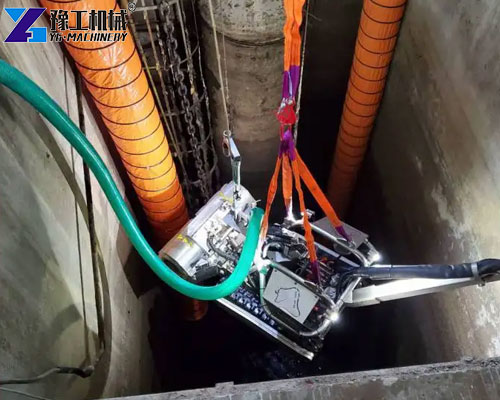
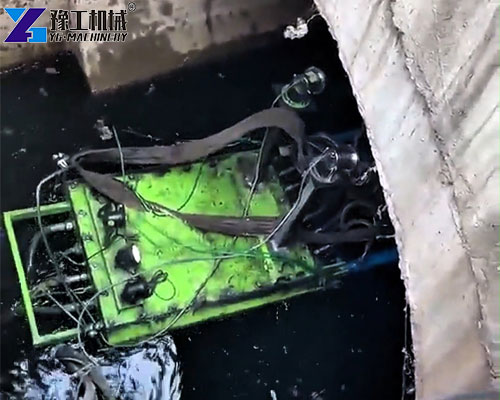
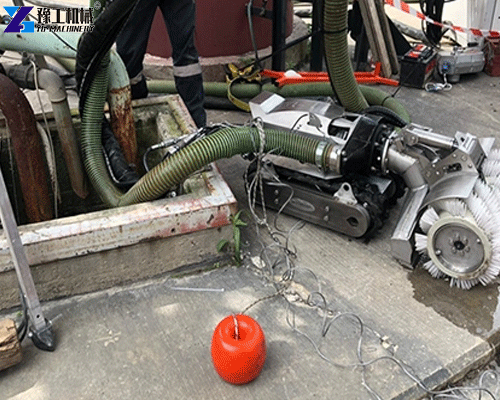
A dredging robot combines sediment loosening, hydraulic pumping, remote operation, and visual monitoring to support sludge removal in industrial tanks, lakes, large-diameter pipelines, and covered drainage channels. Depending on the model and configuration, the following systems help improve operational control and adapt the robot to different site conditions.
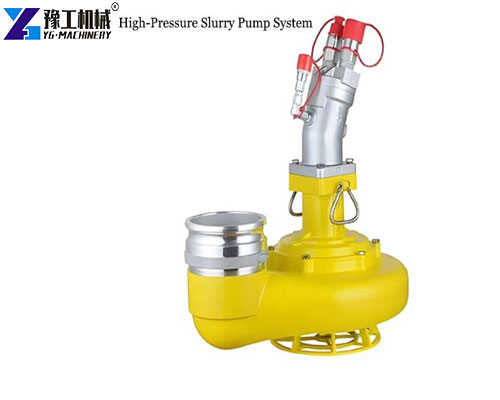
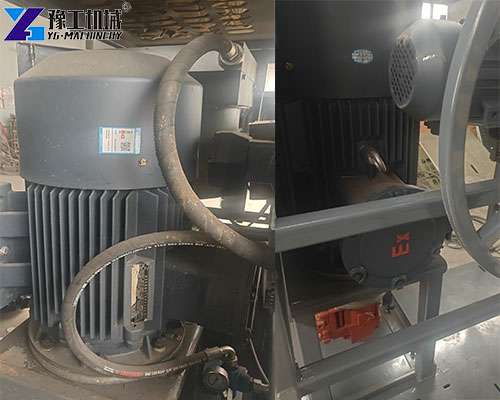
1. Hydraulic Sludge Transfer Pump
The hydraulic sludge transfer pump moves loosened sludge and sediment through a discharge hose or pipeline to a designated collection or treatment point. The hydraulic drive can be configured for demanding dredging environments where reliable slurry transfer is essential.
Pump selection should consider the sediment’s solids concentration, particle size, required flow rate, and total discharge distance. These factors are especially important when cleaning deep tanks, long municipal pipelines, or drainage channels where the discharge point is far from the robot.
Key benefits:
- Transfers collected sludge to a designated discharge point
- Supports continuous dredging when site conditions and pump specifications permit
- Allows pump configuration to be matched to different sediment characteristics
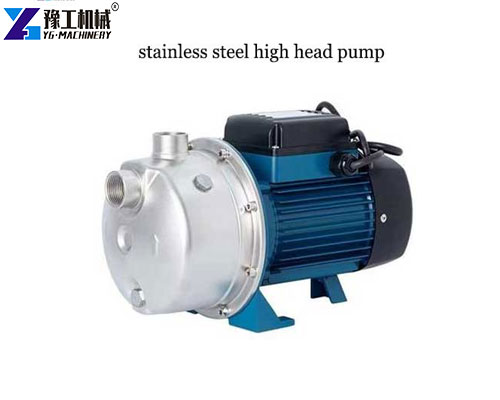
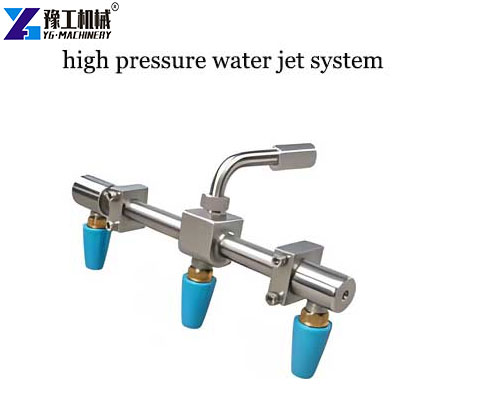
2. Hydraulic Water Jet System
The hydraulic water jet system directs pressurized water toward compacted sludge and settled sediment to help loosen material before pumping. This can be useful when deposits have become firm or accumulated over an extended period.
Water-jet pressure and flow should be matched to the sediment and surrounding structure. For lakes and environmentally sensitive locations, the operating method should also consider sediment resuspension and water-quality requirements.
Key benefits:
- Helps loosen settled sludge and sediment
- Supports sediment collection and pumping
- Can improve access to deposits that are difficult to remove by suction alone
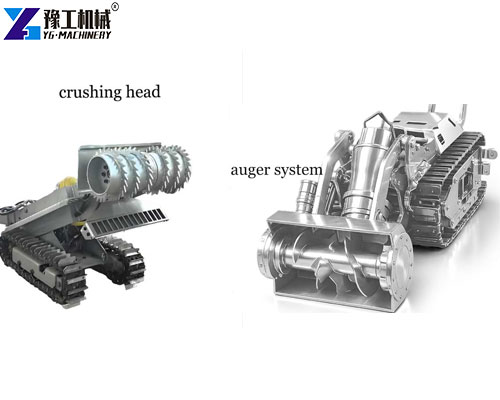
3. Auger System or Cutting Head
Depending on the configuration, an auger or cutting head helps break up, loosen, or direct sediment toward the pumping inlet. This is particularly useful when the robot encounters cohesive sludge or deposits that do not flow easily into the pump.
The appropriate mechanism depends on sediment consistency and particle size. An auger system is not suitable for every type of debris, and hard objects or oversized materials may need to be removed separately.
Key benefits:
- Helps loosen cohesive or compacted deposits
- Guides suitable sediment toward the suction area
- Supports more consistent material collection under appropriate conditions
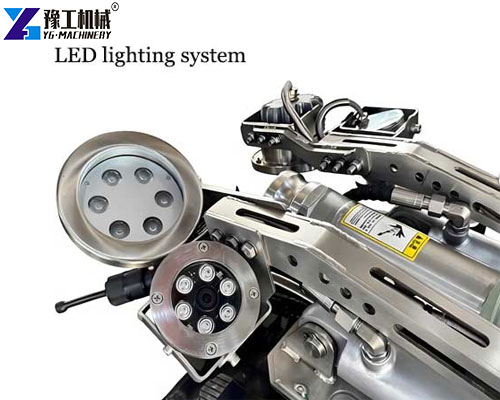
4. LED Visual Monitoring System
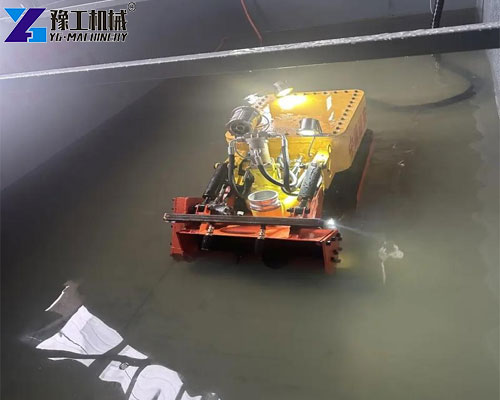
An LED visual monitoring system illuminates the working area and provides the operator with a view of the robot’s surroundings through an onboard camera, where fitted. This is especially helpful in dark tanks, submerged work areas, covered drainage channels, and other locations with limited natural light.
Visibility depends on water clarity, suspended sediment, camera placement, and lighting conditions. Turbid water may limit the usefulness of visual monitoring, so the camera should be treated as an operational aid rather than a guarantee of clear underwater visibility.
Key benefits:
- Helps operators monitor the working area in low-light conditions
- Supports observation of robot movement and nearby obstacles
- Provides additional visual feedback during remote operation
5. Remote-Controlled Operation
Remote control allows the operator to maneuver and operate the dredging robot from a suitable operating position rather than remaining next to the machine. Depending on the model, remote functions may include movement, direction changes, and control of selected dredging operations.
This can be particularly valuable in large tanks, wastewater basins, culverts, and covered channels where direct access is restricted or undesirable.
Key benefits:
- Allows the operator to control the robot from a distance
- Reduces the need for direct manual handling near sludge
- Helps manage equipment movement in difficult-to-access working areas
Remote control does not eliminate the need for site-specific safety procedures. Communication range, cable or hose management, visibility, and emergency stopping arrangements should be confirmed before operation.
6. Integrated Sediment Loosening and Pumping
When the configuration combines a water jet or cutting mechanism with a sludge transfer pump, the robot can loosen suitable deposits and convey the resulting slurry through a coordinated process. This integration can reduce the need for separate manual loosening and material collection steps.
Actual performance depends on the sediment type, pump configuration, operating depth, and discharge conditions. For pipeline and culvert projects, the equipment must also fit through the available access opening and navigate the route safely.
Note: Not every dredging robot includes all these features as standard. Confirm the selected model’s pump, water-jet system, auger or cutting head, camera, lighting, and remote-control functions before placing an order.
Main Applications of Dredging Robots
1. Industrial Tanks and Wastewater Basins
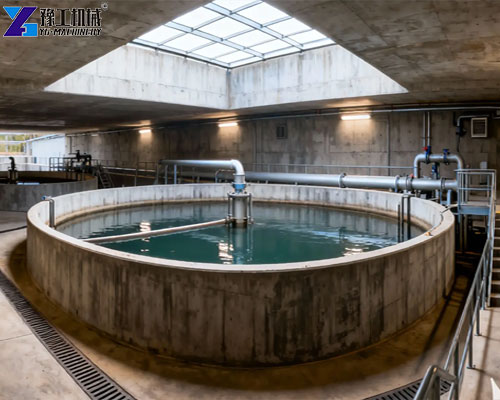
Industrial sedimentation tanks, wastewater pools, and treatment basins can accumulate sludge that reduces usable capacity and interferes with normal operations. Conventional cleaning may require draining the tank, arranging extensive equipment, or sending workers into difficult working environments.
A dredging robot can help remove accumulated sludge while reducing the need for direct manual contact with the material. Depending on the facility layout and equipment configuration, it may be used for sedimentation tanks, wastewater basins, process-water pools, and other industrial sludge collection areas.
Key selection factors:
- Tank dimensions and available access openings
- Sludge depth, consistency, and solids concentration
- Required pumping capacity and discharge distance
- Compatibility with the site’s operating and safety requirements
For industrial projects involving potentially hazardous sludge, the site conditions and applicable safety requirements must be assessed before equipment selection.
2. Lake and Pond Sediment Removal
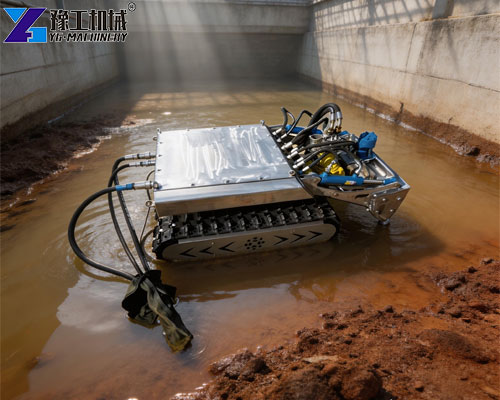
Lakes, ponds, and reservoirs gradually accumulate silt, mud, and organic sediment. Excessive sediment can reduce water depth, affect water storage capacity, and contribute to changes in aquatic habitat.
A dredging robot can support targeted sediment removal in selected areas, including locations where large conventional dredging equipment is difficult to deploy. The appropriate setup depends on water depth, sediment thickness, access conditions, the size of the water body, and environmental restrictions.
For lake dredging projects, consider:
- The depth and distribution of accumulated sediment
- Water depth and operating conditions
- The required sediment removal rate
- Slurry discharge distance and dewatering arrangements
- Measures to control sediment disturbance and manage discharged material
Dredging is not automatically the best solution for every lake. A site assessment should establish whether sediment removal is necessary and how it can be carried out with appropriate environmental controls.
For lake restoration and natural water body projects, explore our environmental dredging and ecological restoration solutions.
3. Large-Diameter Municipal Pipelines (600 mm and Above)
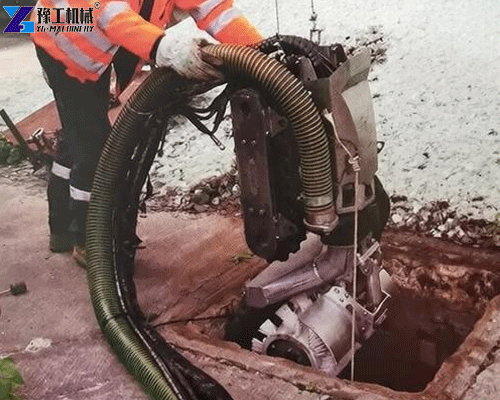
Municipal pipelines with an internal diameter of 600 mm or more may accumulate sand, silt, grease, and other deposits that restrict flow or increase maintenance requirements. In suitable pipelines, a compact dredging robot can help remove accumulated sediment without relying entirely on manual cleaning.
However, a pipe’s nominal diameter alone does not determine whether a robot can enter or operate effectively. The available manhole or access opening may be smaller than the pipeline itself.
Before selecting a dredging robot, confirm:
- Pipeline diameter: The internal diameter and any changes in pipe size
- Access dimensions: The minimum opening through which the robot must pass
- Pipeline layout: Length, bends, gradients, and changes in elevation
- Operating conditions: Water depth, flow conditions, and sediment type
- Sludge discharge: Required pumping distance, elevation, and disposal arrangements
A robot suitable for a straight pipeline may not be suitable for a line with tight bends, steep gradients, or significant obstacles. Check the robot’s dimensions, mobility, cable or hose arrangement, and pumping performance against the actual pipeline layout.
4. Culverts and Covered Drainage Channels
Culverts, covered channels, and underground drainage passages can accumulate mud, silt, and sand over time. Restricted access and limited working space can make conventional cleaning difficult, particularly where personnel entry is undesirable or impractical.
A remotely operated dredging robot may help remove sediment from accessible sections of these structures while keeping operators away from the immediate working area.
Important considerations include:
- The dimensions of the entrance and internal passage
- Channel depth, width, and sediment thickness
- The presence of standing water or flowing water
- Bends, steps, obstructions, and changes in elevation
- The distance to the sludge collection or discharge point
For long or complex drainage systems, inspect the route and determine whether the robot can reach the target area and transfer the removed sludge effectively. Remote operation can reduce direct exposure, but it does not eliminate the need for confined-space risk assessment and appropriate site safety procedures.
5. Mining Pits and Other Sediment Collection Areas
Mining operations and industrial sites may have sediment accumulation in settling ponds, collection pits, and process-water basins. Depending on the material and site conditions, a dredging robot can assist with removing settled sludge and sediment from these areas.
Selection should account for the material’s density, particle size, abrasiveness, solids concentration, and required discharge distance. Highly abrasive or coarse material may need a different pump configuration from ordinary soft sludge.
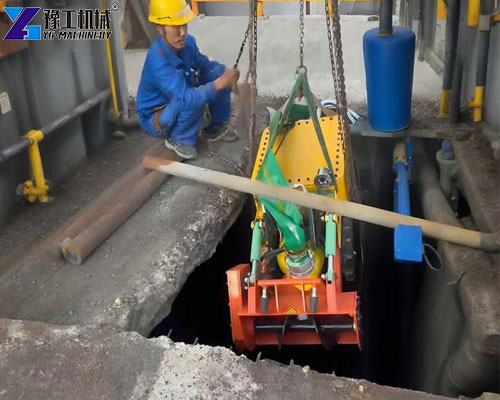
Malaysia Case Study: Custom YG450 Dredging Robot for Concrete Pump Tank Cleaning
A customer in Malaysia needed to remove accumulated sludge from a concrete pump tank. The main challenge was the tank’s restricted access, with an opening diameter of only 800 mm, making it difficult to use conventional cleaning equipment.
Solution: Customized YG450 Dredging Robot
We provided a customized YG450 dredging robot designed to pass through the tank’s narrow access opening and perform sludge removal inside the tank.
- Customized for restricted access: Designed to pass through a tank opening with a diameter of just 600 mm.
- Efficient sludge removal: Helps remove accumulated sludge from the concrete pump tank.
- Remote operation: Allows the operator to control the robot without needing to work directly beside the equipment inside the tank.
Results
The customized YG450 provided an effective solution for cleaning the concrete pump tank through its limited access opening. Its compact design helped address the site’s space constraints and made sludge removal more practical.
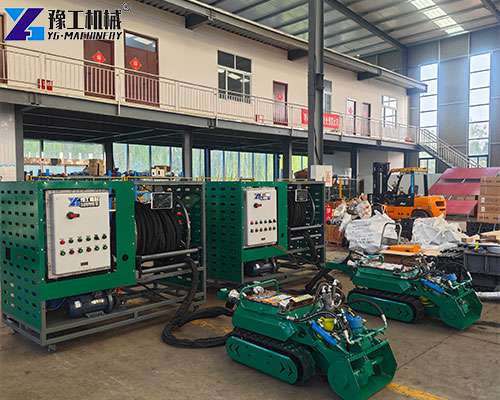
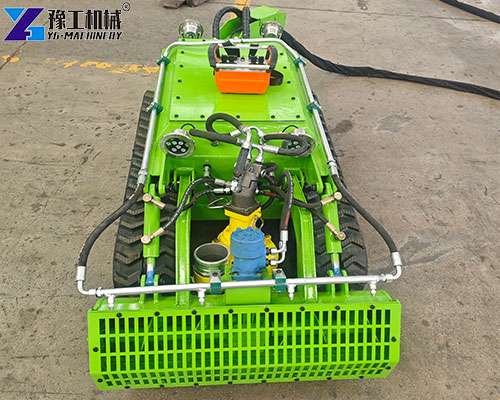
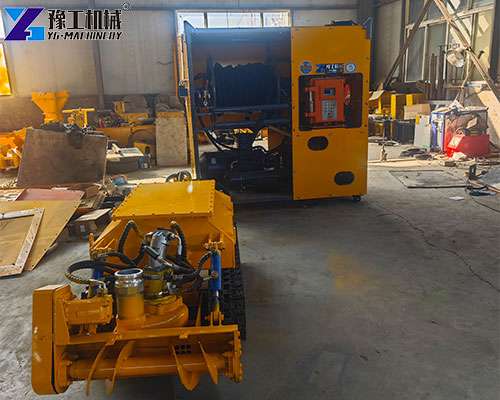
Why Choose a Dredging Robot for Sludge Removal?
A dredging robot can be a practical solution when accumulated sludge is difficult to reach using conventional cleaning methods. Its suitability depends on the site layout, sediment conditions, and required removal performance.
- Reduce manual cleaning work: Remote operation can reduce the need for direct worker involvement near sludge and in difficult-to-access areas.
- Reach challenging locations: A suitable model may access selected industrial tanks, lakeside areas, large-diameter pipelines, and covered drainage channels where conventional equipment is difficult to deploy.
- Match equipment to site conditions: Different pump and sediment-loosening configurations can be selected according to sludge properties, access dimensions, and discharge requirements.
- Plan maintenance more efficiently: Targeted sediment removal can help operators address accumulated deposits in specific areas without unnecessarily disturbing the entire site.
The best solution depends on the actual working conditions. Before selecting a dredging robot, evaluate the access opening, sediment characteristics, operating depth, and required sludge discharge distance.
How to Choose the Right Dredging Robot?
The most suitable dredging robot depends on more than its advertised pumping capacity. Evaluate the complete working process, from site entry to sediment discharge.
| Selection factor | What to confirm |
|---|---|
| Application | Industrial tank, lake, pipeline, culvert, or drainage channel |
| Access dimensions | Minimum opening, manhole size, and equipment clearance |
| Sediment properties | Sludge consistency, solids concentration, particle size, and abrasiveness |
| Working depth | Water depth and required operating depth |
| Pumping performance | Required flow rate, discharge distance, and elevation |
| Mobility and control | Travel method, remote-control range, and site obstacles |
| Site safety | Water conditions, atmospheric hazards, electrical requirements, and access restrictions |
Important: Pump capacity is not the same as actual sludge removal capacity. Real-world performance varies with sediment properties, water content, pipe and hose dimensions, pumping distance, and operating conditions.
FAQ About Dredging Robots
1.What applications can a dredging robot handle?
Depending on its configuration, a dredging robot may be used for industrial tanks, wastewater basins, lakes, ponds, large-diameter municipal pipelines, culverts, covered drainage channels, and mining sediment collection areas.
2.Can a dredging robot clean municipal pipelines with a diameter of 600 mm or more?
Potentially, yes. However, the robot must also pass through the available access opening and operate within the pipeline’s geometry. Confirm the minimum entry dimensions, bends, water depth, sediment conditions, and discharge distance before selecting a model.
3.Can a dredging robot remove sediment from lakes?
Yes, suitable dredging robots can support lake and pond sediment removal. The equipment should be matched to the water depth, sediment characteristics, required removal rate, and environmental requirements of the project.
4.Can a dredging robot operate in culverts and covered drainage channels?
A suitable remotely operated model may be used in accessible culverts and covered channels. Feasibility depends on passage dimensions, obstructions, water conditions, sediment properties, and the distance to the discharge point.
5.How do I choose the right dredging robot model?
Provide the application, site dimensions, access opening, water depth, sediment type, approximate sediment thickness, and required discharge distance. These details help determine which model and pump configuration may be appropriate.
Request a Dredging Robot Recommendation
Looking for a dredging robot for industrial sludge removal, lake sediment, a large-diameter municipal pipeline, or a covered drainage channel?
Send us the application details, site dimensions, sediment conditions, and a few site photos or videos. Our team can review your requirements and recommend a suitable configuration for your project.
Contact us to discuss your dredging robot requirements and request a project-specific quotation.