Removing accumulated sludge from underground drainage channels can be challenging, especially when access is restricted and sediment must be pumped out of the working area. A suitable dredging robot can help operators remove sediment remotely without relying entirely on manual cleaning.
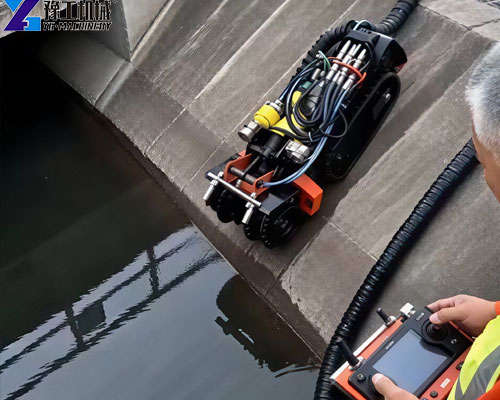
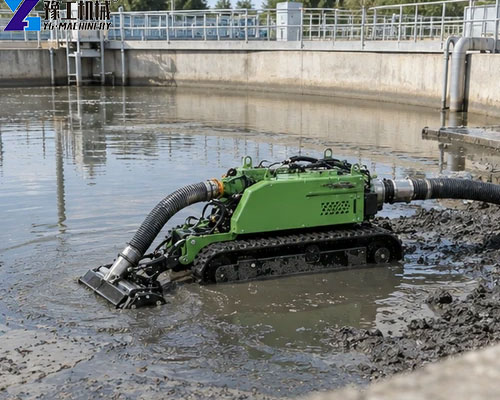
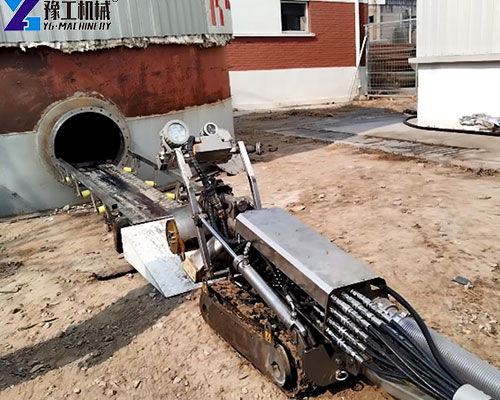
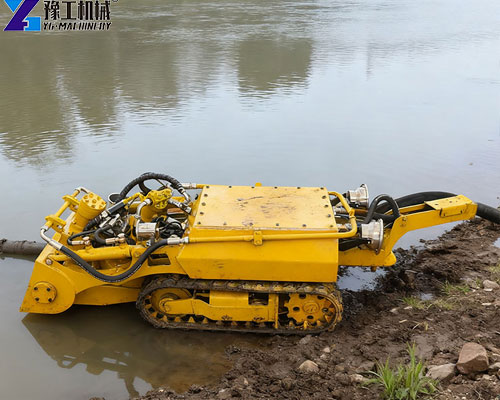
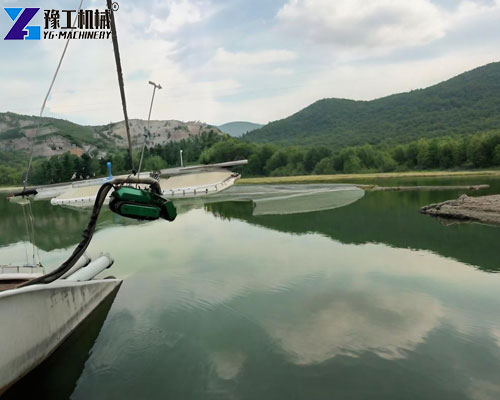
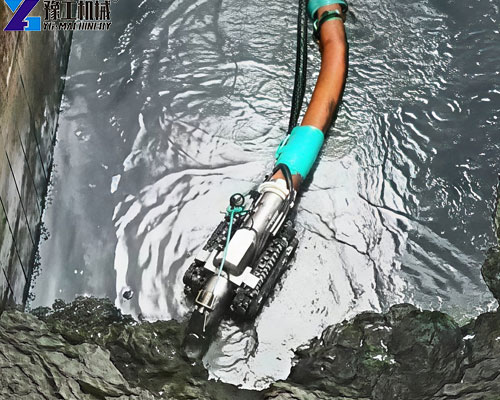
In Spilimbergo, in the Province of Pordenone (PN), Italy, a customer purchased a YG450 crawler dredging robot for underground drainage channel cleaning. The robot moves through a suitably sized drainage passage and pumps accumulated bottom sludge out of the channel.
With its compact tracked design, wireless remote control, and 3-inch pumping system, the YG450 is designed for sludge removal in confined-access environments where equipment dimensions and sediment conditions must be carefully considered.
Underground Drainage Cleaning Project in Spilimbergo, Italy
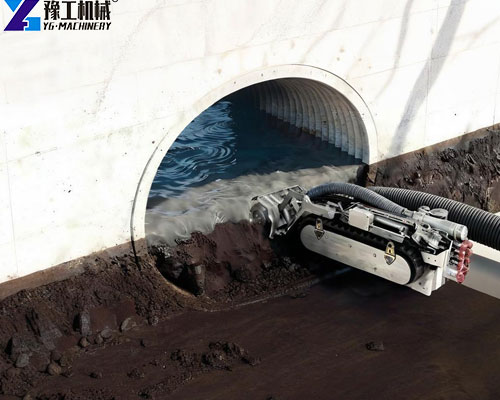
Underground drainage channels can accumulate sediment over time. Soil particles, organic matter, and other deposits may settle on the bottom, reducing the effective flow area and creating a need for periodic cleaning.
For this project in Spilimbergo, Italy, the customer needed equipment that could move inside a relatively large underground drainage passage and pump out the accumulated bottom sludge.
The customer selected the YG450 crawler dredging robot for this application. Its compact body, tracked movement, and remote-control system make it suitable for drainage cleaning tasks when the passage dimensions, access opening, and sludge characteristics meet the equipment’s operating requirements.
Project overview
- Location: Spilimbergo, Pordenone (PN), Italy
- Application: Underground drainage channel sludge removal
- Equipment: YG450 crawler dredging robot
- Working method: The robot moves through the drainage passage and pumps out accumulated bottom sludge
- Control system: Wireless remote control
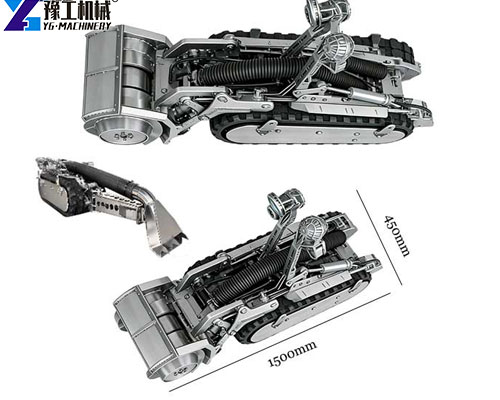
How the YG450 Crawler Dredging Robot Removes Drainage Sludge?
The YG450 combines tracked mobility with a pumping system to support sludge removal inside suitable underground drainage channels.
1. Compact Design for Restricted Access
The YG450 measures no more than 1,700 × 450 × 450 mm. Its compact dimensions help it pass through restricted access points when the available opening and internal clearance are sufficient.
The recommended minimum access opening is 600 mm. Before selecting the machine, operators should also check the passage’s internal width, height, turns, obstacles, and floor conditions.
2. Tracked Movement Inside the Drainage Channel
The crawler design allows the robot to travel along the bottom of a suitable drainage passage while cleaning operations are controlled remotely.
Its travel speed is 3–12 m/min. Actual movement depends on the channel surface, sludge conditions, obstacles, and operating setup.
3. Pumping Accumulated Bottom Sludge
The YG450 is equipped with a 3-inch pump with a rated flow capacity of up to 50 m³/h and a pump head of 0–30 m.
These specifications support sludge pumping in suitable working conditions. Actual throughput depends on factors such as sludge concentration, particle characteristics, pipeline length, elevation changes, and discharge conditions.
For soft sludge, the stated particle-size capacity is approximately 10–20 mm. Larger solids or materials with different characteristics should be evaluated before the machine is selected.
4. Wireless Remote Control
The wireless remote-control system allows the operator to control the robot’s movement and cleaning operation from a suitable operating position.
Two underwater LED lights are included to improve visibility around the robot in submerged working environments. Actual visibility depends on water clarity and site conditions.
YG450 Crawler Dredging Robot Specifications
The following table summarizes the main YG450 parameters relevant to underground drainage channel cleaning.
| Parameter | YG450 Specification |
|---|---|
| Robot Dimensions | ≤ 1,700 × 450 × 450 mm |
| Minimum Access Opening | ≥ 600 mm |
| Dredging Width | 450 mm |
| Travel Speed | 3–12 m/min |
| Pump Diameter | 3 inches |
| Pump Flow Rate | 50 m³/h |
| Pump Head | 0–30 m |
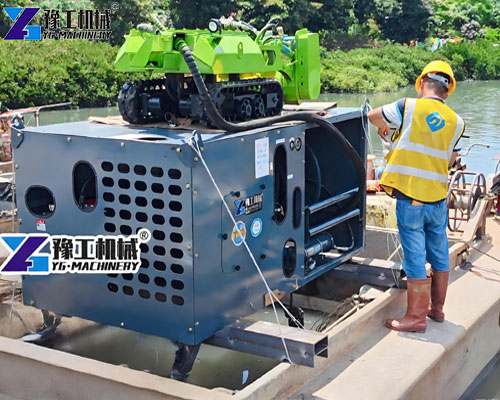
| Hydraulic Station Dimensions | 2,000 × 1,100 × 1,500 mm (recommended) |
| Main Motor Power | 11–15 kW |
| Hydraulic System Pressure | 0–16 MPa |
| Particle Size Capacity | ≤ 10–20 mm for soft sludge |
| Winch Speed | 0–10 r/min |
| Optional Pipe Length | 20–30 m |
| Control System | Wireless remote control |
| Lighting System | 2 underwater LED lights |
Note: Pump flow rate is a rated equipment parameter, not a guarantee of actual sludge removal volume per hour. Final performance depends on the material being pumped and the site configuration.
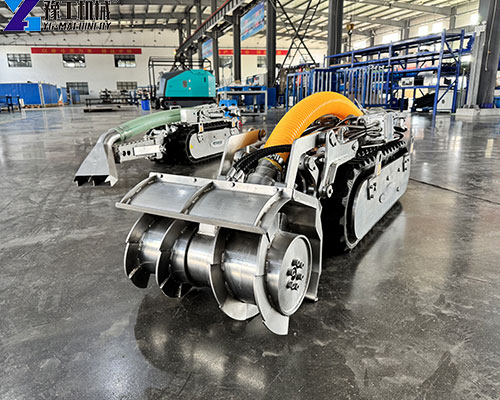
What to Check Before Choosing a Drainage Cleaning Robot?
Not every underground drainage channel has the same dimensions or sediment conditions. Before choosing a crawler dredging robot, consider the following factors.
Access Opening and Internal Clearance
Measure the entry opening and the passage’s internal dimensions. The YG450 requires an access opening of at least 600 mm under the stated specifications, but the actual entry route must also provide sufficient clearance for safe movement.
Sludge Type and Particle Size
Identify whether the deposits consist mainly of soft sludge, fine sediment, sand, or larger debris. The YG450’s stated particle-size capacity applies to soft sludge; coarse solids and fibrous materials may require a separate assessment.
Pumping Distance and Elevation
The required discharge distance and vertical lift affect pumping performance. The YG450 has a stated pump head of 0–30 m, but the suitable configuration depends on the actual pipeline route, material properties, and discharge conditions.
Power Supply and Equipment Layout
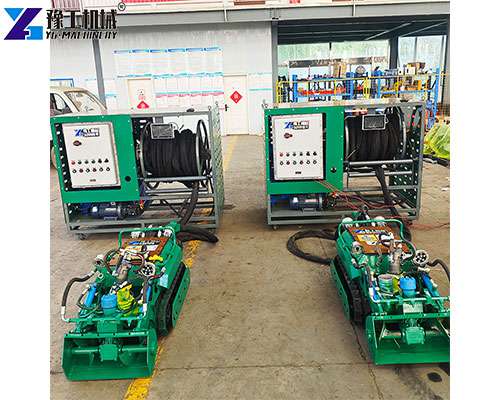
Check the power requirements and the space available for the hydraulic station. The recommended hydraulic station dimensions are 2,000 × 1,100 × 1,500 mm. The site layout should accommodate the station, discharge hose, and operating personnel.
What Information Is Needed for a Drainage Cleaning Robot Quotation?
Choosing the right crawler dredging robot depends on the dimensions of the drainage passage, the type of accumulated sediment, and the required pumping conditions. Providing the following information helps our team evaluate whether the YG450 is suitable for your project.
- Channel dimensions: Internal width, height, and access opening size.
- Sediment conditions: Sludge thickness, material type, and approximate particle size.
- Pumping requirements: Required discharge distance, vertical lift, and discharge location.
- Site conditions: Available power supply, obstacles, turns, and space for the hydraulic station.
Based on these details, our team can assess the application requirements and recommend a suitable dredging configuration.
Need a crawler dredging robot for underground drainage cleaning? Send us your project dimensions and sludge conditions to request a technical assessment and quotation.